
In-Store Production: How to Avoid Disconnected Planning and Why Most Retailers Get It Wrong

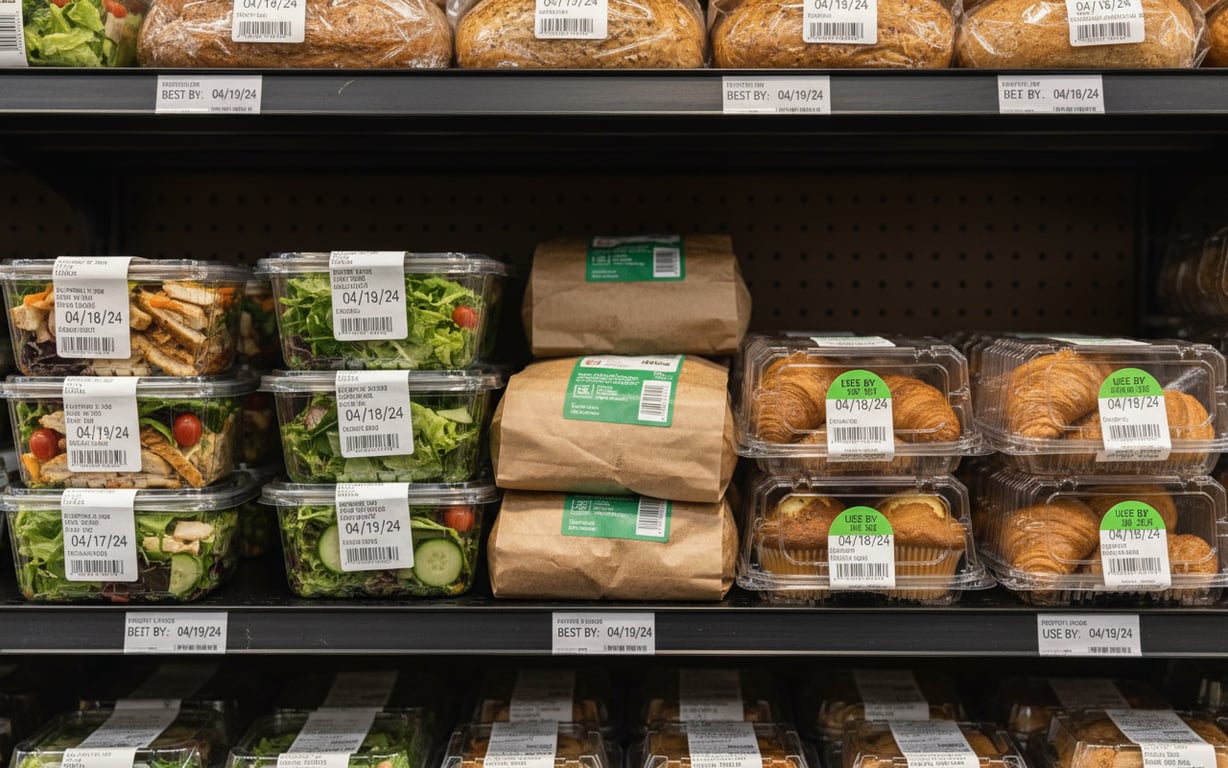
Disconnected planning occurs when forecasting, ingredient ordering, labor scheduling, and store execution operate in separate systems without shared visibility. In fresh and prepared food departments, this structural gap drives overproduction, stockouts, misaligned labor, and margin erosion every single day. Solving it requires linking every planning function into one coordinated workflow.
Table of Contents
What disconnected planning means for in-store production
Walk through the back-of-house area of almost any grocery store's bakery, deli, or prepared foods counter, and you'll likely find a familiar scene: handwritten production logs taped to a cooler door, a manager cross-referencing yesterday's sales on a tablet, and a supervisor guessing at tomorrow's staffing needs based on gut feel rather than data. This is disconnected planning in retail operations in action, and honestly, it's remarkably common in departments that handle fresh or made-to-order goods.
Disconnected planning happens when the systems and teams responsible for forecasting demand, ordering ingredients, scheduling labor, and executing production work independently of one another, with little or no shared visibility. Fresh replenishment might live in one tool, production tracking in a spreadsheet, and workforce scheduling in an entirely separate application. Each team makes decisions based on the information available to them, without knowing what adjacent departments or upstream suppliers are doing.
The consequences show up on the sales floor every day. A bakery team may forget to thaw dough on schedule because no one flagged an ingredient delay. A deli manager, unaware that a barbecue promotion is running in the meat department, may under-order potato salad and watch the shelf go empty by mid-afternoon. These aren't isolated mistakes; they're symptoms of a structural problem.
The financial impact compounds quickly. Overproduction leads to markdowns and shrink. Underproduction leads to lost sales and frustrated shoppers. Misaligned labor scheduling drives either excess payroll cost or chronic understaffing during the exact hours when demand peaks. Understanding what causes disconnected planning in retail stores is the first step, but solving it requires more than better spreadsheets — it requires linking forecasting, ingredient ordering, labor planning, and store execution into one coordinated workflow, so that every decision reflects what's actually happening upstream and on the shop floor.
Root causes of disconnected retail planning
To fix things, retailers first need to understand that the problem is rarely a lack of data. Most modern retailers collect enormous volumes of transactional information every single day. The real issue is structural, and when you dig into why in-store production planning fails, you consistently find the same pattern: production, inventory, and demand planning operate on different timelines, inside different systems, without a shared feedback loop connecting them.
Static production scheduling: Many retailers treat production scheduling as a downstream output of demand forecasting — a fixed schedule generated only after forecasts are finalized, days or even weeks in advance. This static approach cannot absorb demand variability such as seasonal spikes, promotional lifts, or sudden trend shifts. Legacy planning methodologies, including traditional Material Requirements Planning approaches carried over from manufacturing, were never designed for the volatility of fresh, in-store production. By the time a schedule reaches the production floor, it may already be outdated.
Mismatched planning horizons: Sales and Operations Planning cycles typically set production volumes based on long-term, aggregate projections, while inventory management systems respond to store-level sell-through data that may arrive days or weeks later. Without a continuous, real-time feedback loop connecting these live demand signals back into active production commitments, execution problems remain invisible to central planners until the sales window has already closed and the opportunity — or the waste — has already occurred.
Organizational silos: When merchandising, supply chain, and store operations report through separate management structures with separate KPIs, no single team owns the end-to-end outcome. Each department optimizes for its own metric — fill rate, labor cost, or promotional lift — without visibility into how those decisions interact. The result is a system where every individual team appears to be doing its job correctly, yet the overall production plan still breaks down at the point of execution.
These three causes of disconnected retail planning almost always reinforce one another, which is why piecemeal fixes rarely produce lasting improvement. A better forecasting tool cannot compensate for organizational silos, and clearer KPIs cannot repair a static scheduling process that ignores real-time demand.
How poor cross-department communication drives production failures
In-store production failures are rarely confined to a single counter. They're driven, in large part, by the absence of structured cross-department communication in retail production. When merchandising, supply chain, and store operations teams work in isolation, critical operational details fall through the cracks. A bakery team may fail to complete pre-production steps, such as thawing frozen dough at the correct time, simply because they have no visibility into what ingredients are currently on order or delayed in transit.
Promotional misalignment is another common failure pattern. A barbecue promotion in the meat department naturally drives a spike in demand for deli sides like potato salad or coleslaw. Without a shared operational picture, the deli manager has no way of anticipating that spike, and the department runs short exactly when demand is highest. This isn't a staffing problem or a forecasting problem in isolation — it's a communication problem that touches both.
When retailers rely on fragmented, paper-based logs or disconnected legacy systems, different teams inevitably operate from mismatched versions of reality. A campaign approved at headquarters might launch before the necessary ingredients arrive at the store, or before enough labor has been scheduled to handle the increased workload. This is exactly the kind of friction that a more coordinated approach to retail operations and cross-team collaboration is designed to eliminate, by enabling real-time data sharing between store departments rather than isolated, outdated snapshots.
When space planning, replenishment, and production scheduling don't continuously inform one another, the result is margin erosion, costly markdowns, and elevated shrink — all traceable back to a simple lack of shared visibility between teams that ultimately serve the same customer.
Aligning in-store production with demand planning
Fresh departments face a challenge that packaged goods retailers rarely encounter: products made on-site, such as baked goods, rotisserie chicken, and prepared salads, have extremely short shelf lives and demand curves that shift by the hour. Morning shoppers buying breakfast pastries want entirely different products and quantities than the afternoon snack crowd or the dinner-rush shopper picking up a rotisserie chicken on the way home. A single static daily production target cannot capture this variability, which is why so many stores experience both midday out-of-stocks and end-of-day waste on the very same day.
Solving this requires demand forecasting for in-store production that operates at the intraday level rather than the daily or weekly level. It's not enough for a forecast to be mathematically accurate; it must also be physically executable. A forecast that calls for a much larger batch is meaningless if the store lacks the oven capacity, preparation space, or labor hours to produce it. Effective planning platforms account for batch sizes, equipment availability, and preparation lead times alongside historical sales patterns, ensuring that what the forecast recommends is actually achievable on the shop floor.
This is where space and assortment planning becomes directly relevant to production. Store layout, equipment footprint, and shelf capacity all constrain how much can realistically be produced and displayed at any given time, and aligning in-store production with demand planning means factoring these physical constraints in from the start, preventing plans that look good on paper but fail in practice.
Seasonal demand shifts in in-store production add another layer of complexity. Holidays, local events, and sudden weather changes can all drive sharp, short-term spikes in demand for specific items. Managing this volatility requires a direct link between store-level production and upstream supply chain replenishment, so that when recipe management and ingredient tracking are unified with the demand forecast, the raw materials needed for a seasonal spike are already on order well before the spike arrives — rather than discovered as a shortage after the fact.
What effective demand alignment requires
Intraday forecasting: Demand models that operate at the hour-by-hour level, not daily or weekly averages, to capture shifting customer patterns throughout the day.
Physical constraint integration: Planning platforms that factor in oven capacity, batch sizes, preparation space, and labor hours alongside sales history, so that every recommended schedule is genuinely executable.
Space and assortment alignment: Store layout, equipment footprint, and shelf capacity incorporated into the demand forecast to prevent plans that fail at the point of execution.
Upstream supply chain linkage: A direct connection between store-level production and ingredient replenishment, so that raw materials for seasonal spikes are ordered before the demand arrives, not after a shortage is discovered.
Integrating POS data with production planning
Modernizing fresh departments starts with replacing static, historical assumptions with live demand signals drawn directly from point-of-sale data. Retailers that rely on weekly averages or monthly planning cycles inevitably miss the rapid shifts in customer behavior that occur within a single day. Integrating POS data with production planning means feeding real-time transactional data, sell-through rates, and promotional calendars directly into the scheduling engine, allowing store teams to align daily output with actual consumption patterns as they unfold, rather than reacting to yesterday's numbers.
This kind of integration also reinforces real-time data sharing between store departments. Bakery, deli, and sushi counters are highly interdependent, even though they're rarely managed as a single unit. Without a shared operational reality, a promotion running in the meat department can trigger an unexpected spike in deli side-dish demand that catches the deli counter completely by surprise. A unified platform ensures that merchandising, replenishment, and production teams work from the same source of truth, closing the communication gaps that otherwise lead to empty shelves, high shrink, and misaligned labor schedules.
Executing this connected model well depends on forecasting that goes beyond simple daily totals. Fresh items require intraday forecasting that accounts for specific time-slot demand patterns, local weather changes, and regional events. This forecasting must also factor in the same physical store constraints discussed earlier — oven capacity, batch sizes, and preparation lead times — so that the resulting production schedule isn't just data-driven but genuinely executable by the team on shift that day.
How POS integration improves production planning
Before POS Integration
Teams react to yesterday's sales
Departments plan independently
Promotions create surprises
Forecasts rely on historical averages
After POS Integration
Production responds to live demand signals
Teams plan using the same data
Promotions are reflected in plans automatically
Forecasts adapt continuously throughout the day
Result: Better availability, less waste, and more efficient labor allocation

Inventory planning for perishable in-store goods
Managing fresh and ultra-fresh departments requires a departure from traditional replenishment models built for packaged goods. Because items like baked goods, rotisserie chickens, and prepared salads have exceptionally short shelf lives, standard safety stock formulas simply do not work. Demand also fluctuates dramatically by day of the week — a product that sells out by Friday afternoon might sit largely untouched on Monday morning. Applying a single, static safety stock level across the entire week creates a double penalty: spoilage during slow periods and stockouts during peak demand.
Effective inventory planning for perishable in-store goods requires dynamic safety stocks that scale automatically based on weekday-specific demand patterns and historical forecast accuracy. This is closely tied to broader inventory and replenishment strategy, since the same principles that govern shelf-stable goods — having the right stock, in the right place, at the right time — apply just as urgently, if not more so, to perishables where the cost of getting it wrong shows up almost immediately as waste.
This precision is the foundation for reducing food waste through better production planning. Rather than relying on manual guesswork, modern systems use automated cost-benefit calculations that weigh the financial risk of lost sales against the projected cost of spoilage for every order. For prepared food departments, this extends to recipe and ingredient integration: translating the demand forecast for a finished item, such as a deli sandwich, into its raw components through a retail bill of materials, while accounting for preparation lead times and ingredient yields.
Batch-level inventory tracking addresses the challenge of managing highly volatile, often non-barcoded items. By monitoring expiration dates at the batch level and applying First-In, First-Out logic, a planning platform can project spoilage before it happens, giving store managers early warnings that trigger proactive markdowns or strategic transfers to higher-performing locations rather than writing the loss off entirely. This is one of the most practical answers to the question of how retailers can reduce in-store production waste without sacrificing availability.
Key inventory strategies for perishable in-store goods
Dynamic safety stocks: Safety stock levels that scale automatically based on weekday-specific demand patterns and historical forecast accuracy, rather than a single static figure applied across the entire week.
Automated cost-benefit calculations: Systems that weigh the financial risk of lost sales against the projected cost of spoilage for every order, replacing manual guesswork with data-driven ordering decisions.
Retail bill of materials integration: Translating finished product demand forecasts into raw ingredient requirements, accounting for preparation lead times and ingredient yields across prepared food departments.
Batch-level expiration tracking: Monitoring expiration dates at the batch level with First-In, First-Out logic so that spoilage can be projected before it occurs, enabling proactive markdowns or transfers rather than written-off losses.
Labor scheduling for in-store food production
Managing the workforce in fresh departments is a delicate balancing act where timing determines almost everything. Labor scheduling for in-store food production depends directly on the accuracy of the upstream demand forecast. If too few employees are scheduled for a shift, the department cannot produce enough goods to meet the morning or afternoon rush, resulting in empty shelves and, often, quality shortcuts taken under pressure. Schedule too many workers, and operational costs rise quickly, eroding already thin retail margins. Labor cannot be adjusted on the fly — a store cannot simply summon a trained baker at 6 a.m. once a real-time demand spike has already been detected.
Preventing these scheduling bottlenecks requires tightly aligning in-store production with demand planning. When workload forecasting is built into the core planning platform, employee shifts are generated based on actual intraday demand patterns, batch sizes, and preparation lead times, rather than static weekly averages that ignore day-to-day variability.
This alignment depends heavily on the same cross-department communication in retail production discussed earlier. When store operations, merchandising, and supply chain teams share a single source of truth, labor schedules can proactively account for upcoming promotions, seasonal shifts, and omnichannel fulfillment tasks such as picking online grocery orders. The result is a workforce that is consistently in the right place, at the right time, to execute the production plan as written — rather than reacting to gaps after they've already affected the customer experience.
How to align labor scheduling with production planning
Build workload forecasting into the core planning platform so that employee shifts are generated from actual intraday demand patterns, batch sizes, and preparation lead times rather than static weekly averages.
Connect labor scheduling to a shared source of truth across store operations, merchandising, and supply chain, so that upcoming promotions and seasonal shifts are reflected in staffing plans before they affect the floor.
Account for omnichannel fulfillment tasks such as picking online grocery orders within the same labor model used for in-store production, preventing hidden demand from creating unplanned staffing gaps.
Set shift schedules in advance of detected demand spikes, recognizing that trained production staff cannot be sourced on the fly once a real-time surge has already begun.
Which tools help integrate store production planning
Overcoming the operational friction of siloed systems requires carefully evaluating which tools help integrate store production planning into a cohesive, real-time workflow. Modern unified planning platforms replace fragmented legacy systems by consolidating forecasting, recipe management, and labor scheduling into a single interface. Some of these solutions draw heavily on approaches originally developed for factory-floor scheduling, adapted for the realities of in-store production; the same discipline behind manufacturing planning — smarter scheduling, capacity awareness, and distribution coordination — is increasingly being applied to bakeries, delis, and other in-store production departments.
Integrating POS data with production planning is a central capability of these software suites. Rather than relying on static weekly averages or manual paper logs, integrated platforms ingest real-time transactional data and sell-through rates directly into the scheduling engine, allowing store teams to adjust batch sizes and preparation schedules dynamically throughout the day. Mobile-enabled execution tools extend this further, delivering real-time guidance directly to associates on the floor, reducing the mental load on staff and ensuring consistency regardless of an individual employee's experience level.
These unified systems also apply machine learning to deliver more accurate demand forecasting for in-store production. Rather than simply predicting sales volume, the best forecasting engines factor in physical store constraints such as oven capacity, shelf space, and preparation lead times. Combined with intraday demand patterns and external variables like local weather and promotional calendars, these tools generate production schedules that are both statistically sound and operationally realistic — ensuring ingredients are ordered, thawed, and prepared in alignment with actual customer demand, rather than a best guess made days in advance.
Tool categories that integrate store production planning
Unified planning platforms: Consolidate forecasting, recipe management, and labor scheduling into a single interface, replacing fragmented legacy systems and eliminating the need for manual cross-referencing between tools.
POS-integrated scheduling engines: Ingest real-time transactional data and sell-through rates directly, allowing store teams to adjust batch sizes and preparation schedules dynamically throughout the day rather than relying on static weekly averages.
Mobile-enabled execution tools: Deliver real-time, guided workflows directly to associates on the floor, reducing reliance on individual experience levels and ensuring consistent production execution across shifts.
AI-driven forecasting engines: Apply machine learning to factor in physical store constraints, intraday demand patterns, local weather, and promotional calendars, generating schedules that are both statistically accurate and operationally executable.
Building a connected production planning model - best practices
Moving from isolated, paper-based logs to a unified operational model is the essential first step in closing the execution gaps described throughout this article. For any retailer asking how to avoid disconnected planning in in-store production, the answer starts with linking forecasting, ingredient ordering, labor scheduling, and store execution into a single, coordinated workflow rather than treating each as a separate task owned by a separate team. A key component of this model is AI-driven intraday forecasting that evaluates specific time-slot demand patterns, historical performance, and physical store constraints such as oven capacity, shelf space, and batch sizes — the same constraints discussed earlier in the context of demand alignment.
Real-time data sharing between store departments is what eliminates the communication silos responsible for so many production failures. When merchandising, replenishment, and production teams operate from a single source of truth, the system automatically aligns store-level capacity with upstream supply chain movements. This closed-loop coordination is highly effective for reducing food waste through better production planning, since it continuously balances the financial risk of out-of-stocks against the projected cost of spoilage, and translates finished product demand into raw ingredient requirements through a retail bill of materials.
Retailers that have made this transition offer a useful reference point. Selver, a chain of supermarkets and hypermarkets operating in Estonia and a subsidiary of Tallinna Kaubamaja Grupp, illustrates how a grocery retailer can move toward more connected planning across its store network, replacing fragmented, department-by-department decision-making with a more coordinated approach to forecasting and execution.
Dynamic adaptation to seasonal demand shifts in in-store production, alongside external drivers like local weather, holidays, and promotional calendars, keeps the model relevant as conditions change throughout the year. Mobile-enabled execution tools that deliver real-time, guided workflows directly to associates on the floor help ensure consistent execution regardless of experience level, freeing staff to focus on exception-based tasks rather than manually reviewing every single item. Finally, central teams should rely on enterprise-wide dashboards to manage by exception — quickly identifying which specific locations are struggling with waste or margin erosion, so that corrective training and support can be targeted precisely where it's needed most, rather than applied uniformly across the entire chain.
Steps to build a connected production planning model
Establish a shared, real-time source of truth across forecasting, ingredient ordering, and labor scheduling so that every department operates from the same operational picture rather than isolated systems.
Implement AI-driven intraday forecasting that evaluates specific time-slot demand patterns, historical performance, and physical store constraints such as oven capacity, shelf space, and batch sizes.
Connect store-level production to upstream supply chain movements through a retail bill of materials, so that finished product demand is automatically translated into raw ingredient requirements with appropriate lead times.
Integrate seasonal and external demand drivers — including local weather, holidays, and promotional calendars — into the planning model so that it adapts dynamically as conditions change throughout the year.
Deploy mobile-enabled execution tools that deliver real-time, guided workflows directly to associates on the floor, ensuring consistent execution regardless of individual experience level.
Use enterprise-wide dashboards to manage by exception, enabling central teams to quickly identify which locations are struggling with waste or margin erosion and target corrective support precisely where it's needed.

Frequently Asked Questions
What is disconnected planning in retail production? Disconnected planning occurs when forecasting, ingredient ordering, labor scheduling, and store execution are managed in separate systems without shared visibility, leading teams to make decisions in isolation from one another.
Why is disconnected planning especially common in fresh and prepared food departments? Fresh departments face rapidly shifting hourly demand and extremely short shelf lives, which exposes the weaknesses of static, paper-based, or siloed planning processes far more quickly than it does in packaged goods categories.
What are the biggest root causes of disconnected retail planning? The most common causes include mismatched planning horizons between departments, legacy scheduling methods that generate fixed plans before demand data is finalized, and organizational silos where teams optimize for their own metrics rather than a shared outcome.
How does poor cross-department communication lead to overproduction or stockouts? When departments like bakery, deli, and meat operate without shared visibility, one team's promotion or ingredient delay can blindside another, resulting in either excess inventory that must be marked down or empty shelves during peak demand.
How can retailers align in-store production with actual demand? Retailers need intraday forecasting that accounts for hour-by-hour demand shifts, combined with visibility into physical constraints like oven capacity and labor availability, so that production plans are both accurate and executable.
What role does POS data play in production planning? Real-time point-of-sale data replaces static historical averages with live sell-through signals, allowing production teams to adjust batch sizes and schedules throughout the day rather than relying on outdated assumptions.
What inventory strategies work best for perishable in-store goods? Dynamic, weekday-specific safety stock levels, combined with batch-level expiration tracking and First-In, First-Out logic, allow retailers to anticipate spoilage before it happens and reduce shrink.
How should labor scheduling be tied to production planning? Labor schedules should be generated from the same intraday demand forecast used for production, ensuring the right number of trained staff are on shift precisely when production volume requires them.
What types of tools help integrate store production planning? Unified planning platforms that combine AI-driven forecasting, recipe and ingredient management, labor scheduling, and mobile execution guidance are most effective at connecting production planning across store functions.
What is the first step retailers should take toward connected production planning? The first step is establishing a shared, real-time source of truth across forecasting, ingredient ordering, and labor scheduling, so that every department is working from the same operational picture rather than isolated systems.


Comments