
Modern Pharmaceutical & Retail Supply Chain Management Software: The Complete Authority Guide

Updated: 3 days ago
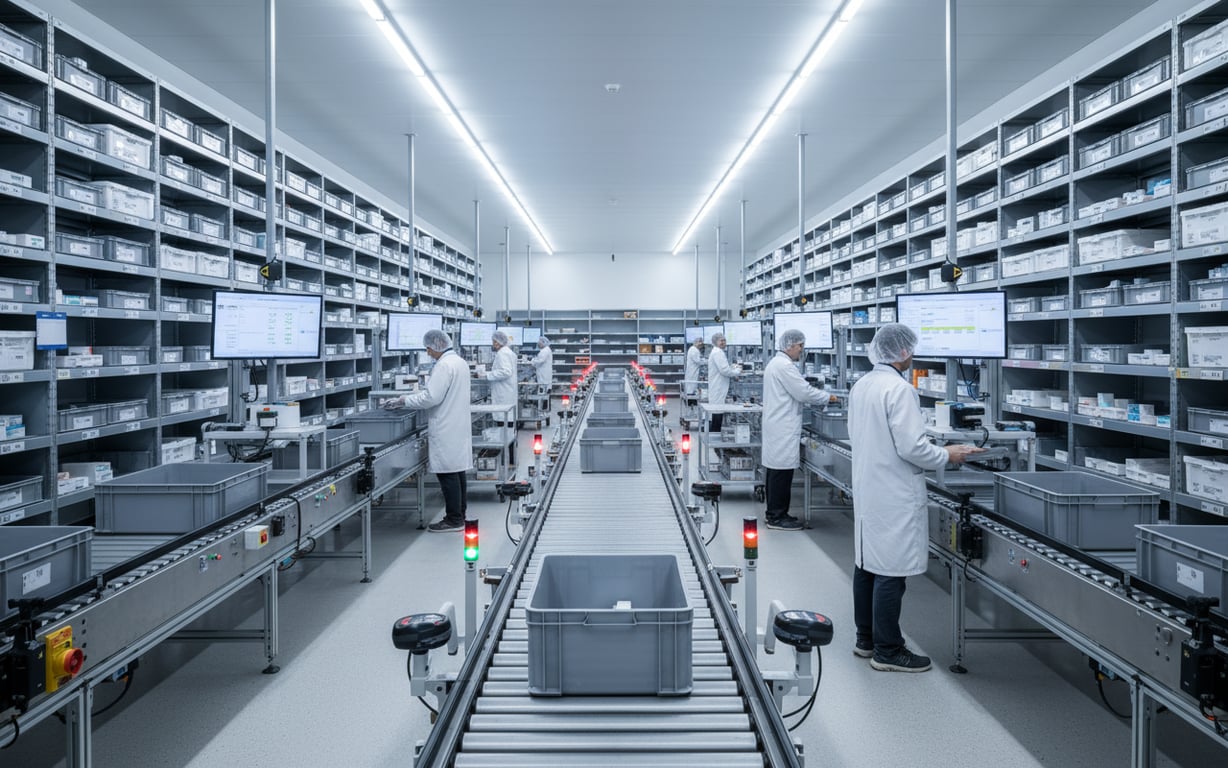
Modern pharmaceutical and retail supply chain management software connects inventory, warehouse, transportation, and compliance data into one digital system so pharmacies, distributors, and healthcare retailers can track every product from manufacturer to shelf. It combines automation, real-time visibility, demand forecasting, and regulatory controls to reduce stockouts, protect temperature-sensitive medicines, and keep operations audit-ready. For store managers and operations leaders, it replaces fragmented spreadsheets and manual processes with a single source of truth for decision-making.
Table of Contents
Core capabilities of retail supply chain management software in pharma
The role of automation and warehouse automation in pharma supply chains
Inventory management and demand forecasting for pharma retail
Real-time tracking and cold chain logistics for pharmaceuticals
Supply chain risk management and third-party logistics for pharma retailers
Sustainability, emerging trends, and choosing the right software
What is modern supply chain software for pharma retail
Modern supply chain software for pharma retail is a connected digital platform that manages the movement of medicines, medical supplies, and related inventory from the manufacturer, through distribution, and all the way to the pharmacy shelf. Instead of treating purchasing, warehousing, transportation, and compliance as separate manual chores, the use of modern supply chain software pharma retail pulls those functions into one data environment where every transaction, lot, and shipment is visible and traceable.
And honestly, the shift toward digitization has become urgent because legacy, paper-based methods just can't keep up with today's regulatory and operational pressure. Industry research on life-science quality operations has found that a meaningful share of organizations still lean on paper records and spreadsheets to manage critical processes — a gap that creates blind spots exactly where visibility matters most. Modern supply chain systems for healthcare retail close that gap by centralizing purchasing, inventory, supplier, and shipment data, so pharmacists and operations teams can make informed decisions in real time rather than reconstructing what happened after the fact.
For retail pharmacy chains and independent stores alike, retail supply chain management software has moved from a nice-to-have edge to a baseline operational requirement, especially as drug shortages, temperature-sensitive products, and serialization mandates keep raising the cost of getting logistics wrong.
Core capabilities of retail supply chain management software in pharma
What sets retail supply chain management software built for pharmaceutical distribution and dispensing apart is that it's designed for regulated, temperature-sensitive, expiration-driven inventory — not generic retail goods. Pharmaceutical supply chain software has to handle lot tracking, controlled-substance rules, and supplier qualification right alongside standard order and inventory functions.
A handful of capabilities show up again and again across leading platforms, and together they explain how does supply chain software improve pharma retail operations at every stage of the product journey:
Order and inventory management: Centralized visibility into stock levels, purchase orders, and demand forecasting, often inherited from broader enterprise resource planning functionality.
Supplier onboarding and assessment: Structured qualification, risk scoring, and documentation tracking for manufacturers and distributors before goods ever move.
Traceability and serialization: Lot, batch, and serial-number tracking that supports recalls and regulatory reporting.
Temperature and condition monitoring: Integrated sensors and alerts for products that must stay within defined ranges during transit and storage.
Warehouse and transportation coordination: Tools that connect picking, packing, and delivery scheduling into one workflow.
Because pharma retail operations rarely fit neatly into a single software category, many multinational pharmacy, health, and beauty retailers lean on integrated platforms to unify these functions across huge store networks; Super-Pharm is a great example of how a multinational pharmacy and health retailer applies this kind of connected operating model across its store footprint.
The role of automation and warehouse automation in pharma supply chains
Automation is genuinely reshaping pharmaceutical warehouse operations, swapping out manual counting, picking, and paperwork for software-driven and robotic processes that move faster and slip up far less. The role of automation in pharma supply chains now stretches across order fulfillment, labor coordination, and transportation planning — not just what's happening on the warehouse floor.
Warehouse automation in pharmaceutical distribution increasingly leans on systems engineered for both human and robotic counting, filling, and dispensing, enabling flow-through processing for products with short shelf lives while keeping regulatory traceability intact at every facility level. Large-scale logistics providers report moving well over one hundred billion dollars in retail pharmaceuticals annually through cloud-native platforms that unify planning, execution, and delivery — a staggering hint at how much volume now depends on automated coordination rather than manual handling. Over on the retail side, AI-driven pharmacy inventory tools have been credited with cutting administrative burden by as much as eighty percent, freeing staff up to focus on patient-facing work instead of stock counts. Retail supply chain technology trends now point toward labor-management software that blends human and robotic workflows into a single view, using real-time performance data to onboard temporary staff quickly and keep fulfillment consistent when demand suddenly spikes.
Inventory management and demand forecasting for pharma retail
Inventory management and demand forecasting tools cut down on stockouts and waste in pharma retail by predicting need at the SKU level and automatically triggering replenishment before shelves run dry or medications hit their expiration dates. Inventory management in pharmaceutical distribution is uniquely demanding because it has to juggle thousands of SKUs, strict expiration windows, and wildly uneven demand between fast-moving basics and rare, expensive treatments.
Demand forecasting for retail and pharma inventory increasingly uses AI to sift through sales history, seasonality, lead times, and even substitute-product availability, letting pharmacies anticipate seasonal swings — think cold-and-flu meds in winter or allergy treatments as spring rolls in. Retail pharmacy platforms built for this purpose can automatically apply seasonality factors, account for supplier holiday schedules, and rotate seasonal assortments chain-wide through automated shelf-facing tools.
The answer to what are the benefits of digital supply chain management for pharma becomes obvious once these calculations run automatically: fewer panicked emergency orders, less expired inventory written off, and steadier product availability for the patients waiting on it. For retailers looking to sharpen this discipline further, AI-driven inventory and replenishment solutions and more advanced replenishment optimization strategies push these foundational calculations into continuously self-adjusting systems.
Real-time tracking and cold chain logistics for pharmaceuticals
Real-time tracking and cold chain technologies protect drug integrity from manufacturer to shelf by continuously monitoring location, temperature, and custody so any deviation triggers an immediate alert instead of a nasty surprise at delivery. Real-time tracking in pharma supply chains now spans ocean, air, truck, rail, courier, and parcel movements — all inside one connected view.
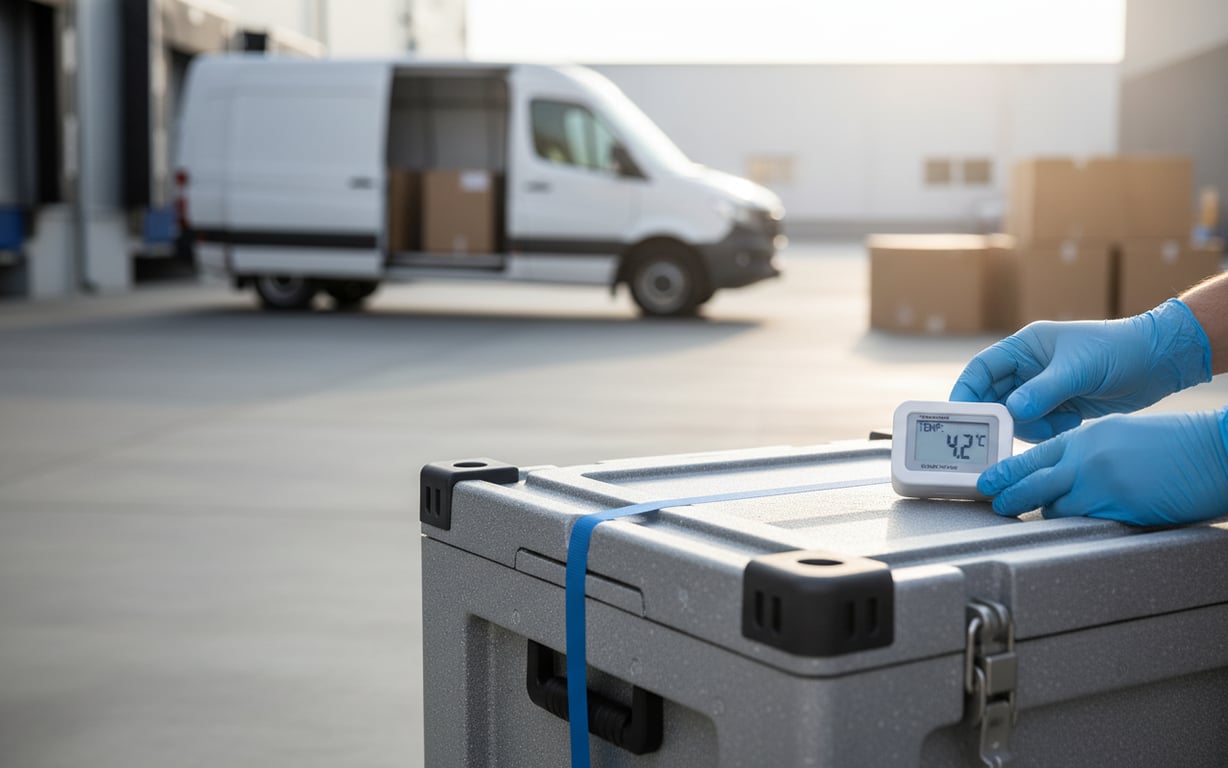
Cold chain logistics for pharmaceuticals answers how does cold chain technology work in pharmaceutical logistics through a mix of Internet of Things sensors, live dashboards, and automated exception alerts that flag temperature excursions before spoilage sets in. This matters more every year, as newer treatments — including cell and gene therapies — need ultra-cold conditions that can dip below minus twenty-five degrees Celsius, leaving far less margin for error than traditional refrigerated storage. Specialist cold chain platforms have supported hundreds of millions of vaccine movements and more than a million parcel shipments, showing the sheer scale at which continuous monitoring now operates. And why is supply chain visibility important for pharmacies? It comes down to consequences: one global pharmaceutical manufacturer reported saving millions of dollars in detention costs and penalties simply by gaining accurate, real-time visibility into in-transit shipments instead of relying on periodic status checks.
Regulatory compliance in pharma supply chain management
Regulatory compliance in pharma supply chain management demands software that can prove — not just claim — that every product was handled correctly at every stage. In the United States, the Drug Supply Chain Security Act has served as the national framework for securing pharmaceutical distribution since 2013, and it now requires trading partners to exchange transaction information, transaction statements, and transaction history at every change of ownership.
Which supply chain challenges affect pharma retailers most often trace right back to this compliance burden: maintaining serialized product identifiers, verifying that identifiers match across trading partners, quarantining suspect product, and holding on to full records for a minimum of six years. Platforms built for global distributors now automate restricted-party and embargoed-destination screening so that shipments crossing borders — such as those governed by the European Union's rules on falsified medicines — get checked before they even leave the warehouse. Others zero in on controlled substances, digitizing the ordering and verification process so every transaction is authenticated against valid licenses before it moves forward.
Serialization and verification: Package-level identifiers checked against trading-partner data.
Electronic records: Time-stamped, tamper-evident documentation supporting Part 11-style compliance.
Recall readiness: Rapid forward-and-backward lot tracing when a hold is issued.
Controlled-substance authentication: Automated license verification for restricted products.
Blockchain and data integration in pharma retail logistics
Blockchain and stronger data integration can close traceability and interoperability gaps in pharma retail by giving every participant in the supply chain access to the same verified, tamper-resistant record — instead of everyone squinting at their own fragmented internal database. The impact of blockchain on pharmaceutical supply chains has moved well past those early pilot projects; by 2026, a number of major pharmaceutical organizations have implemented blockchain-based track-and-trace systems at production scale rather than as limited experiments.
Image suggestion: A diagram illustrating blockchain-based traceability connecting manufacturers, distributors, and pharmacies.
Each participant adds verified information — production lot, shipping conditions, custody transfers — creating a data trail that makes it a whole lot harder for counterfeit product to sneak in undetected. That said, data integration challenges in pharma retail logistics still linger, since different blockchain platforms and legacy systems don't always talk to each other cleanly, and industry groups are still hammering out common interoperability standards. Chemically intelligent data platforms tackle a related gap by weaving together scattered analytical results, batch composition data, and material genealogy into a single searchable family tree, cutting the time teams spend hunting across spreadsheets when they need to back up a regulatory submission or dig into a quality deviation.
Supply chain risk management and third-party logistics for pharma retailers
Risk management strategies and third-party logistics partnerships shore up pharma retailer resilience by opening up alternative paths when a supplier, carrier, or facility hits a snag. Supply chain risk management in the pharmaceutical industry starts by wiring quality oversight into everyday purchasing and inventory decisions, so a recorded deviation or supplier issue immediately shapes sourcing choices rather than gathering dust in a separate system.
When a primary supplier suddenly goes offline, purchasing can't just swap in another source without qualification, additional testing, and updated documentation — which is exactly why connected quality and operations platforms that link supplier evaluations, nonconformances, and corrective actions have become central to resilience planning. Third-party logistics for pharmaceutical retailers layers on more flexibility, letting distributors manage multiple physical, virtual, and 3PL-operated warehouses inside one system so high-value, temperature-sensitive medications like biologics and specialty infusions can be tracked and rerouted between facilities as conditions shift. This kind of coordinated approach mirrors the broader move toward stronger retail operations and supplier collaboration across store networks, where shared data replaces siloed guesswork.
Sustainability, emerging trends, and choosing the right software
Sustainability practices in pharmaceutical supply chains and future trends should be steering pharma retailers toward software that trims waste and emissions while staying nimble enough to pick up new capabilities down the road. Sustainability has gained real urgency as the broader healthcare sector has been estimated to contribute a meaningful share of global greenhouse gas emissions, with packaging, temperature-controlled transportation, and waste disposal singled out as major culprits.

Image suggestion: A sustainable pharmaceutical warehouse with solar panels and an electric delivery vehicle.
Several major manufacturers have set aggressive emissions targets running out to 2035 and 2040, and regulations like the European Union's packaging and carbon border rules are pushing recyclable materials, electric or hybrid transportation, and renewable-powered cold storage into the mainstream. Retail supply chain technology trends for pharma now blend those environmental goals with digital ones, and pharmaceutical supply chain software vendors are increasingly competing on how well they unify compliance, forecasting, and sustainability reporting inside one platform. Longer-term planning frameworks such as integrated business planning can help retailers tie these supply chain investments back to broader financial and operational strategy.
When picking between these models — and among specific vendors — pharma retailers should weigh scalability, integration with existing point-of-sale and warehouse systems, and how easily the platform can absorb new compliance requirements as they crop up.
Frequently Asked Questions
What is pharmaceutical supply chain management software? It's a digital platform that coordinates purchasing, inventory, warehousing, transportation, and compliance data for medicines and medical supplies moving from manufacturer to pharmacy or patient.
How is pharma supply chain software different from generic retail software? It adds lot and expiration tracking, temperature monitoring, controlled-substance rules, and serialization requirements that standard retail systems simply aren't built to handle.
Why is cold chain monitoring important for pharmacies? Many medications, including vaccines and biologics, lose effectiveness outside strict temperature ranges, so continuous monitoring prevents spoilage and protects patient safety.
What is the Drug Supply Chain Security Act? It's a United States framework, in effect since 2013, that requires serialized tracking and transaction documentation to keep counterfeit or diverted drugs from entering the supply chain.
Can blockchain really prevent counterfeit medicines? Blockchain creates a shared, tamper-resistant record of custody transfers and shipping conditions, making it significantly harder to introduce falsified product without detection — though interoperability between platforms is still maturing.
How does demand forecasting reduce pharmacy waste? By analyzing sales history, seasonality, and lead times, forecasting tools trigger replenishment at the right time, cutting down on both stockouts and expired, unsellable inventory.
What role does automation play in pharmaceutical warehouses? Automation handles picking, packing, and labor coordination with less manual effort, improving speed and accuracy while supporting flow-through processing for short-shelf-life products.
Should a pharmacy chain use third-party logistics providers? Many retailers use 3PL partners to handle overflow inventory, specialty storage, or regional distribution, provided the software gives full visibility into 3PL-held stock alongside owned warehouses.
Is cloud-based or on-premise software better for pharma retailers? Cloud-based platforms generally offer lower upfront costs and easier scaling, while on-premise systems suit organizations that want direct infrastructure control; the right choice really depends on IT resources and growth plans.
What should a pharmacy consider when evaluating new supply chain software? Key factors include regulatory compliance features, integration with existing point-of-sale and warehouse systems, scalability, and how well the platform supports sustainability and forecasting goals.


Comments