
Supply Chain AI in 2026: How AI-Powered Demand Forecasting, Predictive Analytics & Machine Learning Are Redefining Supply Chain Planning

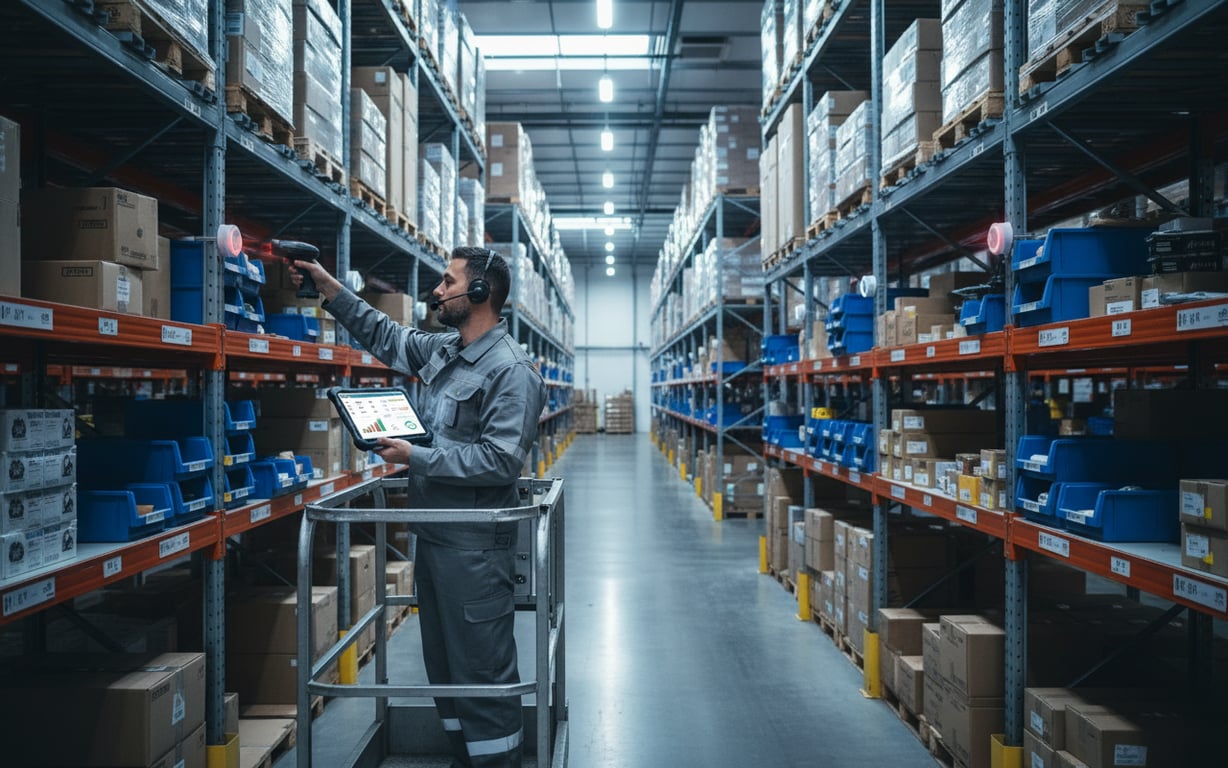
AI supply chain optimization uses machine learning, predictive analytics, and autonomous software agents to continuously sense, simulate, and rebalance operations in real time. In 2026, organizations with mature AI capabilities report measurable profitability advantages, reduced logistics costs, and lower carrying inventory, making intelligent supply chain systems a baseline competitive requirement rather than an experimental initiative.
Table of Contents
What is AI supply chain optimization and why does it matter now
AI powered demand forecasting - how machine learning is reshaping predictions
Supply chain visibility technology and real-time data integration
Predictive analytics for inventory management and supply chain resilience
Generative AI and agentic AI - the next frontier in logistics planning
Key takeaways - how to position your supply chain for AI-driven success
What is AI supply chain optimization and why does it matter now
AI supply chain optimization refers to the use of machine learning, predictive analytics, and increasingly autonomous software agents to continuously sense, simulate, and rebalance operations rather than relying on static spreadsheets and quarterly forecasts. Instead of reacting to disruptions after they surface, these systems monitor conditions in real time, run scenario simulations, and recommend or execute corrective actions before problems cascade through the network.
The way AI improves supply chain management compared to legacy approaches comes down to connecting previously siloed systems, such as ERP, warehouse management, and transportation management platforms, into a single operational layer. This integration compresses decision latency from days to seconds, freeing planners from manual data reconciliation and letting them focus on judgment calls that genuinely require human oversight.
What makes supply chain AI in 2026 a turning point is the collapse of the line between physical and digital operations. Organizations that have matured their AI capabilities report a meaningful profitability advantage over slower-moving competitors, alongside measurable reductions in logistics costs and carrying inventory. With geopolitical fragmentation, tariff volatility, and climate-related disruptions all intensifying at once, deploying these intelligent systems has moved from experimental to essential.
Image suggestion: A futuristic supply chain control room with data dashboards illustrating AI-driven visibility.
AI powered demand forecasting - how machine learning is reshaping predictions
How machine learning improves demand forecasting accuracy
Pattern recognition at scale: Machine learning models ingest far larger and more varied datasets than traditional methods, recognizing complex, nonlinear patterns across product categories, locations, and seasons that would escape manual analysis entirely.
External signal integration: Models fold in weather patterns, trade policy shifts, and regional economic indicators to dynamically generate contingency plans rather than a single static forecast.
Scenario-based planning: Planners can see not just what demand is likely to be, but how it might shift under several plausible future scenarios.
Inventory and cost reduction: AI-enabled distribution operations achieve a 20% to 30% reduction in inventory alongside a 5% to 20% reduction in logistics costs.
Hybrid human-machine model: 54% of planners today prefer a model in which machine learning generates recommendations while humans retain final decision authority.
Traditional forecasting methods built on historical averages and manual adjustments are steadily being replaced by AI powered demand forecasting models capable of ingesting far larger and more varied datasets. Rather than extrapolating from last year's sales alone, these models recognize complex, nonlinear patterns across product categories, locations, and seasons that would escape manual analysis entirely.
A defining strength of machine learning supply chain planning is its ability to fold in external signals, such as weather patterns, trade policy shifts, and regional economic indicators, to dynamically generate contingency plans rather than a single static forecast. Planners see not just what demand is likely to be, but how it might shift under several plausible future scenarios.
The operational payoff is substantial. Research indicates that AI-enabled distribution operations achieve a 20% to 30% reduction in inventory alongside a 5% to 20% reduction in logistics costs, a combination that directly improves both service levels and working capital efficiency. Gartner projects that 70% of large-scale organizations will adopt AI-driven demand forecasting by 2030, and 60% of supply chain leaders already plan to invest in predictive analytics for inventory management. Yet full autonomy remains a longer journey; 54% of planners today prefer a hybrid model in which machine learning generates recommendations while humans retain final decision authority, a balance explored further in advanced replenishment optimization strategies that combine predictive modeling with practical inventory discipline.
Supply chain visibility technology and real-time data integration
What is supply chain visibility technology
Supply chain visibility technology establishes a unified data layer that feeds real-time signals into a digital supply chain twin, a virtual replica used to simulate disruptions and coordinate responses before they materialize physically. It addresses persistent data integration challenges by normalizing information across ERP, warehouse, and transportation systems into a single, reliable source of truth.
Moving from manual oversight to more autonomous execution requires organizations to first resolve persistent supply chain data integration challenges. A striking 89% of operations leaders report that their technology investments have not fully delivered expected results, with integration complexity and inconsistent data quality cited as the primary culprits. Without clean, normalized data flowing across ERP, warehouse, and transportation systems, even the most sophisticated AI models simply accelerate poor decisions rather than preventing them.
Modern artificial intelligence supply chain optimization tackles this by establishing a unified data layer that feeds real-time signals into a digital supply chain twin, a virtual replica used to simulate disruptions and coordinate responses before they materialize physically. This foundation supports smarter retail operations and supplier collaboration by giving every stakeholder, from store managers to distribution planners, a shared, accurate view of inventory and flow.
AI supply chain use cases built on integrated visibility
Physical AI systems: Combine machine learning with IoT sensors for real-time warehouse sensing and execution.
Autonomous trade analytics: Monitor tariff changes to rebalance supplier networks dynamically.
Real-time freight auditing: Normalize invoice data across carriers to surface immediate savings.
These emerging AI supply chain use cases all depend on the same prerequisite: a single, reliable source of truth flowing continuously across every operational layer.
Predictive analytics for inventory management and supply chain resilience
Why AI is important for supply chain resilience
Predictive analytics for inventory management shifts organizations from reactive firefighting to proactive mitigation. This matters because 78% of supply chain leaders expect disruptions to intensify over the next two years, yet only 25% feel adequately prepared. That gap is precisely why AI has become so important for supply chain resilience: by integrating machine learning models with continuous, real-time data, companies can dynamically adjust safety stock levels and rebalance distribution networks before bottlenecks actually occur, a capability central to effective inventory and replenishment planning.
The measurable benefits of AI in supply chain operations reinforce the case for investment. AI-enabled distribution workflows deliver a 20% to 30% reduction in inventory alongside a 5% to 20% reduction in logistics costs, according to McKinsey research, while organizations with mature AI driven supply chain forecasting achieve a 23% profitability advantage over less advanced competitors, per Accenture findings. As enterprises look toward 2026 and beyond, Gartner's projection that 70% of large organizations will adopt AI-based forecasting by 2030 signals a broader shift toward a self-correcting operational foundation designed to absorb macroeconomic shocks rather than simply react to them.
Generative AI and agentic AI - the next frontier in logistics planning
What are generative AI and agentic AI in logistics planning
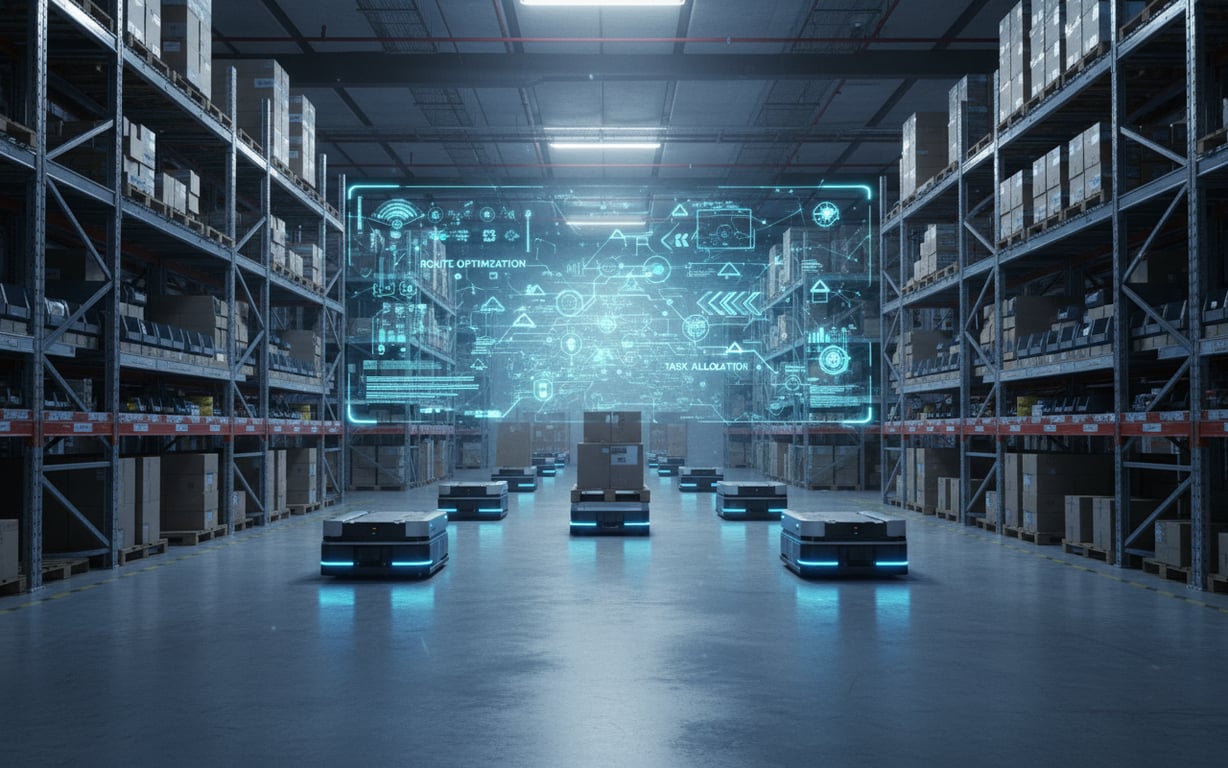
Generative AI in logistics planning and agentic systems mark a shift from passive analytics toward active, autonomous execution. Rather than merely producing text or summaries, these advanced agents can query disparate ERP, warehouse, and transportation platforms directly, reasoning through multi-step logic chains to orchestrate complex workflows with minimal human intervention.
Emerging agentic AI use cases in supply chain planning
Purchase order optimization: Autonomous agents evaluate supplier conditions and demand signals to generate and adjust orders without manual input.
Always-on integrated business planning: Continuous monitoring and replanning across commercial and operational functions in real time.
Autonomous root cause analysis: Agents identify and diagnose disruption sources as they occur, compressing response time from days to seconds.
Embedding these capabilities directly into machine learning supply chain planning software compresses decision latency from days down to seconds, a change with direct implications for how retailers manage space and assortment planning alongside demand shifts.
While 54% of planners currently prefer a hybrid approach where humans retain final authority over key decisions, the trajectory toward greater autonomy is unmistakable. Industry projections suggest that 60% of supply chain disruptions will be resolved without human intervention by 2031, positioning agentic AI as a foundational, rather than experimental, layer of future logistics operations.
AI adoption barriers in logistics and how to overcome them
Common barriers to scaling AI in supply chain operations
Poor data quality: 87% of operations leaders report that non-normalized data has directly hampered AI progress, causing models to accelerate poor decisions rather than correct them.
Lack of formal AI strategy: Only 23% of supply chain organizations currently have a documented AI strategy, leaving most teams deploying point solutions without clear governance or accountability.
Integration complexity: Connecting ERP, warehouse, and transportation systems into a clean, unified data layer remains the most cited technical obstacle to enterprise-wide AI activation.
How to move from pilot projects to full AI deployment
Build a clean, structured data foundation iteratively across core systems before scaling AI models.
Pilot targeted, well-scoped AI use cases rather than attempting a single sweeping transformation.
Resolve integration complexity across ERP, warehouse, and transportation platforms to enable enterprise-wide activation.
Establish formal AI governance and accountability structures to move beyond fragmented point solutions.
Align commercial decisions with supply realities through disciplined pricing and promotion optimization.
Despite ambitious goals, several AI adoption barriers in logistics continue to prevent organizations from scaling. Chief among these are persistent data integration challenges, with 87% of operations leaders reporting that poor data quality has directly hampered progress. When weighing the risks of AI in supply chain operations, the most critical concern is that models applied to non-normalized data simply accelerate poor decision-making rather than correcting it. Compounding this, Gartner reports that only 23% of supply chain organizations currently have a formal AI strategy, leaving many teams to deploy point solutions without clear governance.
Overcoming these hurdles requires building a clean, structured data foundation iteratively while simultaneously piloting targeted, well-scoped use cases. Industries with high asset intensity and complex distribution networks, including manufacturing, automotive, pharmaceuticals, and retail, tend to see the most immediate returns and are typically the ones that benefit most from AI supply chain tools.

Key takeaways - how to position your supply chain for AI-driven success
Build a clean data foundation: Normalizing information across ERP, warehouse, and transportation systems is non-negotiable, since AI-driven optimization depends entirely on high-quality inputs.
Align tools with a formal, documented strategy: Capturing the real profitability advantages of mature AI adoption requires sustained commitment rather than isolated pilots.
Upskill teams for hybrid collaboration: Human planners must be equipped to govern autonomous systems and manage the complex, high-stakes decisions that still require judgment.
Positioning your operation for supply chain AI in 2026 rests on three strategic pillars: a normalized data foundation, a documented AI strategy tied to measurable outcomes, and a workforce ready to collaborate with autonomous agents. Leaders who prioritize these capabilities today will capture the profitability, resilience, and cost advantages that define the next generation of intelligent supply chains.


Comments