
Retail Grocery Supply Chain Management: Mastering Distribution, Logistics, and Inventory Control

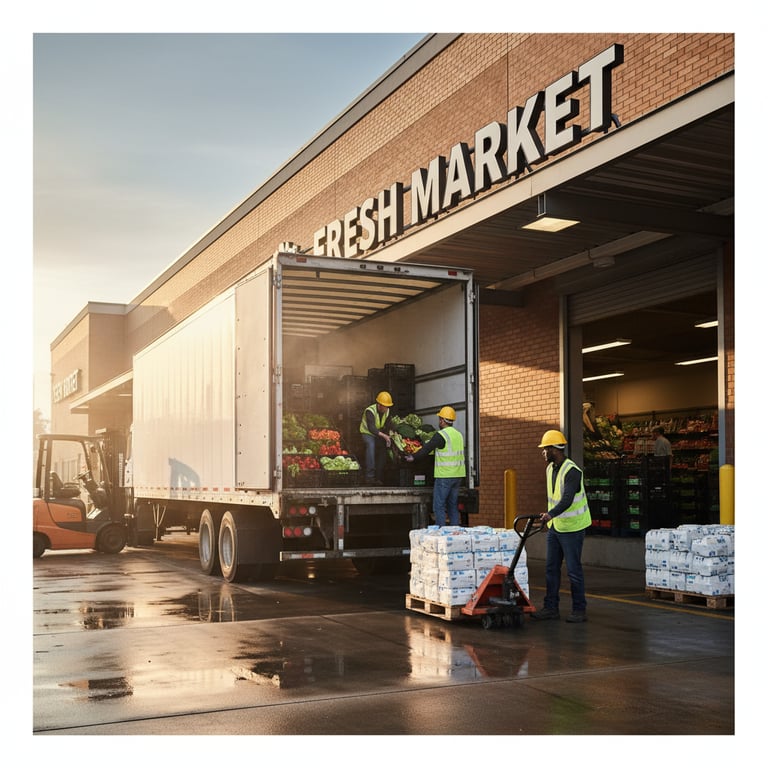
Retail grocery supply chain management is the end-to-end coordination of sourcing, storing, and delivering food and consumer goods from producers to shoppers — encompassing procurement, transportation, warehousing, inventory control, and point-of-sale replenishment. It is distinguished from other supply chain models by strict perishability constraints, temperature-controlled logistics, and the management of 30,000 to 50,000 SKUs requiring near-real-time demand visibility.
What is retail grocery supply chain management
Retail supply chain management in grocery is the end-to-end orchestration of every activity involved in moving food and consumer goods from producers to shoppers — procurement, transportation, warehousing, inventory control, and shelf replenishment, all working in concert to keep stores stocked with fresh, affordable products.
What sets the food retail supply chain apart is the unforgiving nature of perishability. Unlike electronics or apparel, groceries operate on tight expiration windows that demand precise temperature control and accelerated fulfillment cycles. A clothing retailer can sit on excess inventory for weeks; a grocer holding surplus fresh produce faces spoilage within days. Add in the sheer breadth of SKUs — a typical supermarket carries 30,000 to 50,000 items — and you can see why the groceries supply chain is one of the most operationally complex environments in commerce.
Grocery distribution networks and warehouse operations
Modern grocery distribution networks are built around regional distribution centers (DCs) that act as the critical link between suppliers and stores. These facilities receive bulk shipments, break them down into store-specific orders, and dispatch them on tight delivery schedules — often overnight — to protect freshness and on-shelf availability.
Key grocery warehouse management strategies
FIFO rotation: First-in, first-out protocols ensure older stock ships before newer inventory, reducing spoilage.
Temperature-zoned storage: Separates ambient, chilled, and frozen goods within the same facility, each governed by strict compliance standards.
Cross-docking: Transfers products directly from inbound to outbound trucks with minimal storage time — widely used for high-velocity perishables like dairy and fresh bread.
Slotting optimization: Assigns product locations within the warehouse based on pick frequency and weight, reducing labor costs by 10–20%.
Wave-based or zone-based picking: Maximizes throughput during peak replenishment windows.
Metrics such as order fill rate, dock-to-stock time, and warehouse cost per case are standard benchmarks for evaluating DC performance. Together, these grocery warehouse management practices ensure distribution centers function as high-speed, high-accuracy engines that keep the entire grocery logistics network humming.
Grocery inventory management strategies for retailers
Balancing stock levels with product freshness is the central tension in grocery inventory management. Carry too much, and you generate waste and tie up working capital; carry too little, and you lose sales and disappoint customers. Successful supermarket inventory management resolves this tension through disciplined replenishment policies paired with accurate demand forecasting.
Core replenishment techniques for grocery retailers
Cycle counting: Auditing a rotating subset of SKUs daily rather than conducting infrequent full-store counts keeps inventory records accurate without disrupting store operations.
Par-level replenishment: Sets minimum stock thresholds that trigger automatic reorders.
Vendor-managed inventory (VMI): Shifts replenishment responsibility to suppliers for high-velocity categories like beverages and snacks.
Grocery demand forecasting is where the biggest efficiency gains hide. By analyzing historical sales, promotional calendars, seasonal patterns, and even local weather, retailers can generate store-level forecasts that drive precise order quantities. A well-calibrated forecasting model can meaningfully reduce out-of-stock rates and trim excess inventory at the same time. For a deeper look at how forecasting fits into broader planning, this guide on demand planning versus forecasting breaks down the distinctions and dependencies between the two disciplines. Pairing strong forecasting with AI-driven inventory and replenishment solutions lets retailers place the right stock in the right location at the right time, consistently.
Supermarket supply chain challenges and solutions
The supermarket supply chain faces a convergence of pressures that few other retail formats encounter at once. Perishability is the most unforgiving constraint — a disruption anywhere in the cold chain can render entire shipments unsellable within hours. Demand volatility piles on: a viral recipe, a weather event, or a public health scare can spike or crater demand for specific categories overnight, overwhelming even well-prepared replenishment systems.
Transportation complexity adds another layer. Grocery logistics networks must coordinate refrigerated fleets, strict delivery windows, and multi-stop routes across geographically dispersed stores, all while juggling fuel costs and driver availability. Supplier reliability — especially for fresh produce sourced from agricultural regions subject to seasonal swings — introduces further uncertainty into the groceries supply chain.
Common supermarket supply chain challenges and how to address them
Perishability and cold chain disruption - Solution: Real-time IoT monitoring, clear escalation protocols, and carrier compliance audits
Demand volatility - Solution: Scenario planning tools and AI-driven demand forecasting to model and respond to rapid shifts
Transportation complexity - Solution: Optimized multi-stop routing, refrigerated fleet management, and consolidated delivery scheduling
Supplier reliability - Solution: Diversifying supplier bases for critical categories to reduce single-source dependency
Slow reaction times - Solution: Connecting point-of-sale data directly to supplier systems to compress reaction times from days to hours
For retailers tackling these issues head-on, advanced replenishment optimization strategies offer a structured framework for using data analytics and predictive modeling to minimize stockouts and excess inventory at the same time.
Grocery procurement and supplier collaboration
Grocery procurement is the upstream foundation of supply chain performance. In grocery retail, procurement decisions directly shape product quality, cost structure, and shelf availability. Retailers that negotiate favorable terms, set clear quality specifications, and build long-term supplier relationships consistently outperform those that treat sourcing as a purely transactional function.
Supplier collaboration has evolved well beyond annual contract negotiations. Leading retail supply chain management teams now share sales forecasts, promotional plans, and inventory data with key suppliers through collaborative planning, forecasting, and replenishment (CPFR) frameworks. This transparency lets suppliers align their production schedules with retailer demand signals, shrinking lead times and improving fill rates.
Effective grocery distribution also depends on supplier compliance programs that enforce labeling, delivery accuracy, and freshness requirements. Retailers using structured scorecards and regular performance reviews see measurable improvements in on-time, in-full (OTIF) rates. Platforms designed for retail operations and supplier collaboration can centralize these workflows, making compliance, communication, and joint planning easier to manage at scale.
Technology and automation in grocery supply chains
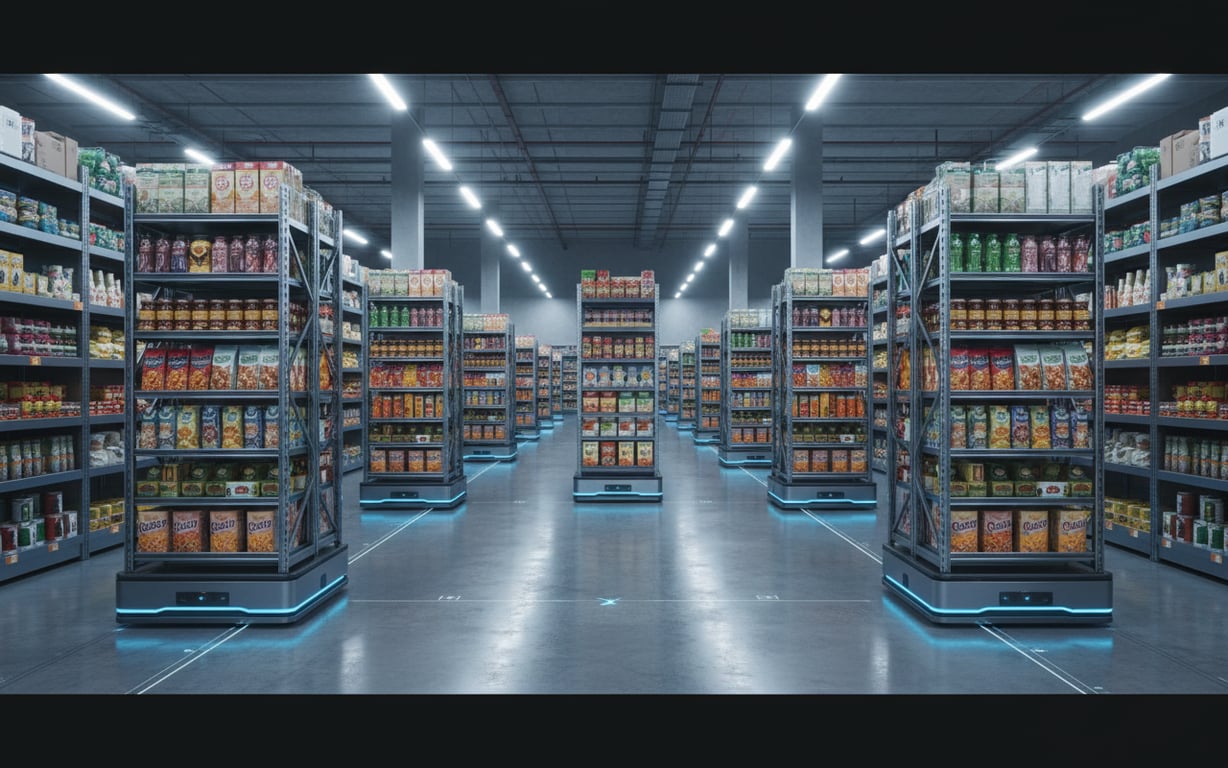
Technology is reshaping every layer of retail supply chain management, from automated picking in distribution centers to AI-powered demand forecasting at store level. Warehouse automation — goods-to-person robotic systems, automated conveyor sorting, and autonomous mobile robots (AMRs) — is reducing labor dependency and lifting throughput accuracy in large-scale grocery operations.
Key technologies transforming grocery supply chain operations
Warehouse automation (AMRs, conveyor sorting, goods-to-person systems): Reduces labor dependency and increases throughput accuracy, a game-changer for modern grocery warehouse management.
Machine learning demand forecasting: Ingests weather forecasts, local events, competitor promotions, and macroeconomic indicators to generate predictions that outpace traditional statistical methods, advancing grocery demand forecasting well beyond spreadsheets.
IoT cold chain monitoring: Sensors embedded in refrigerated transport and storage units provide real-time temperature data, enabling proactive intervention before breaches occur.
Blockchain traceability: Lets retailers track produce from farm to shelf in minutes rather than days — critical during food safety recalls.
For retailers wondering where to start, data-driven retail decision-making frameworks offer a practical roadmap for turning analytics investments into measurable operational gains across the supply chain.
Best practices for optimizing retail grocery operations
Optimizing an end-to-end grocery supply chain takes a disciplined, layered approach that addresses people, processes, and technology in parallel. The practices below are the ones leading retailers lean on to improve profitability and customer satisfaction.
Adopt a unified data platform. Siloed data across procurement, warehousing, and stores is one of the most common barriers to efficiency. Consolidating into a single source of truth lets teams spot bottlenecks, measure performance consistently, and decide faster.
Implement category-specific replenishment policies. Fresh produce, frozen goods, and ambient categories have fundamentally different demand patterns and shelf-life constraints. A one-size-fits-all approach to grocery inventory management leads to chronic over- or under-stocking. Tailor reorder points, safety stock levels, and order frequencies to each category.
Invest in supplier scorecards and OTIF tracking. Measuring on-time, in-full performance by supplier creates accountability and surfaces chronic underperformers before they cause shelf gaps. Retailers that share scorecards transparently typically see OTIF rates climb by 5–15 points within a year.
Prioritize cold chain integrity. Temperature excursions during transport or storage are a leading cause of shrink in fresh and frozen categories. Continuous monitoring, clear escalation protocols, and carrier audits protect both product quality and food safety compliance — a non-negotiable in the supermarket supply chain.
Build cross-functional supply chain teams. The most effective grocery operations break down the walls between buying, logistics, and store operations. Cross-functional teams sharing goals and metrics are better positioned to resolve trade-offs — like balancing promotional volume commitments with warehouse capacity — before they become costly disruptions in grocery distribution.
Apply these practices consistently, supported by the right technology stack, and grocery retailers can compete effectively on the three dimensions that matter most to today's shopper: availability, freshness, and cost.
Frequently Asked Questions
What is the difference between grocery supply chain management and general retail supply chain management? Grocery is distinguished by perishability, temperature-controlled logistics, extremely high SKU counts, and near-daily replenishment cycles. General retail typically runs on longer lead times and doesn't face the same spoilage constraints.
How do grocery retailers reduce food waste in their supply chains? Through accurate demand forecasting, FIFO rotation, dynamic markdown pricing for near-expiry products, and close supplier collaboration to align order quantities with actual demand. Reducing over-ordering at the source is the most impactful lever.
What is OTIF and why does it matter in grocery logistics? OTIF stands for on-time, in-full — measuring whether suppliers deliver the correct quantity at the agreed time. High OTIF rates correlate directly with lower out-of-stock rates and reduced emergency procurement costs.
How does demand forecasting work in a supermarket context? It combines historical sales, promotional schedules, seasonal trends, local events, and increasingly machine learning models to predict demand at the store and SKU level, driving replenishment orders that minimize stockouts and excess inventory.
What role does technology play in modern grocery distribution? It enables automation of picking and sorting, real-time inventory visibility, AI-driven demand planning, IoT-based cold chain monitoring, and blockchain traceability — collectively improving speed, accuracy, and compliance.
What is cross-docking and when is it used in grocery logistics? A practice where inbound products move directly to outbound vehicles with minimal storage time. It's most commonly used for high-velocity perishables — fresh bread, dairy, and produce — where speed through the DC is essential to preserving shelf life.
How can small grocery retailers compete with large chains on supply chain efficiency? By leveraging cloud-based inventory and replenishment platforms, joining buying cooperatives to improve procurement leverage, and focusing on strong supplier relationships within their regional network.
What is vendor-managed inventory (VMI) and is it suitable for grocery retailers? An arrangement where suppliers monitor and replenish inventory at the retailer's location. It works well for high-volume, predictable categories like beverages and packaged snacks — provided data sharing is robust.
How do grocery retailers manage supply chain disruptions such as weather events or supplier failures? Through diversified supplier bases, strategic safety stock for high-risk SKUs, scenario planning tools, and pre-negotiated contingency sourcing agreements. Real-time visibility platforms enable faster detection and response.
What metrics should grocery retailers track to evaluate supply chain performance? On-shelf availability, out-of-stock rate, inventory turnover, shrink rate, OTIF delivery, warehouse cost per case, order fill rate, and days of supply on hand — tracked consistently across categories and locations.


Comments