
End to End Supply Chain Planning: Integrating Demand Forecasting, Sales and Operations Planning, and Optimization Strategies


End to end supply chain planning coordinates every stage of a product's journey — from raw material sourcing through manufacturing, warehousing, distribution, and final delivery — within a single, unified framework. It replaces functional silos with shared data, shared goals, and shared accountability, so that a change in customer demand automatically triggers recalibration across procurement, production scheduling, and logistics without manual intervention.
End to end supply chain planning is the practice of coordinating every stage of a product's journey — from raw material sourcing through manufacturing, warehousing, distribution, and final delivery to the customer — within a single, unified planning framework. Unlike traditional approaches that manage individual functions in isolation, e2e supply chain planning treats the entire value chain as one interconnected system where decisions made at any point ripple across all others.
What is end to end supply chain planning
Traditional supply chain management often suffers from what practitioners call "functional silos," where procurement, production, logistics, and sales each optimize their own performance metrics without regard for the broader system. The result is a chain of locally efficient but globally suboptimal decisions: a procurement team that buys in bulk to reduce unit costs may inadvertently create warehousing bottlenecks, while a sales team running aggressive promotions without coordinating with operations can trigger stockouts and service failures.
End-to-end supply chain management dismantles these silos by establishing shared data, shared goals, and shared accountability across every function. The core principles that make this approach comprehensive include horizontal integration (connecting all business functions), vertical integration (aligning strategic, tactical, and operational planning horizons), real-time data sharing, and closed-loop feedback mechanisms that allow the organization to learn and adapt continuously. When these principles are in place, a change in customer demand automatically recalibrates procurement, production scheduling, and logistics — without manual intervention or departmental negotiation. This is the foundational promise of supply chain planning done at a truly end-to-end level.
Core principles of end to end supply chain planning
Horizontal integration: Connecting all business functions — procurement, production, logistics, and sales — into a single coordinated system.
Vertical integration: Aligning strategic, tactical, and operational planning horizons so decisions at every level reinforce one another.
Real-time data sharing: Providing every function with accurate, timely information rather than siloed or delayed reporting.
Closed-loop feedback: Feeding actual results back into the planning cycle so the organization learns and adapts continuously.
Sales and operations planning in the e2e framework
Sales and operations planning, commonly known as S&OP, serves as the central nervous system of an end to end planning process. It is the structured monthly cycle through which executive leadership, sales, finance, operations, and supply chain teams reconcile demand signals with supply capabilities and financial targets. Within the e2e framework, S&OP is not merely a meeting cadence — it is the mechanism through which strategic business objectives are translated into executable operational plans, anchoring the broader supply chain strategy.
How the S&OP cycle works within end to end supply chain planning
Data gathering: Relevant demand, supply, inventory, and financial data are collected from integrated systems across the organization.
Demand review: Commercial teams present updated forecasts based on market intelligence, promotional calendars, and statistical models.
Supply review: Those forecasts are stress-tested against current capacity, supplier lead times, and inventory positions.
Pre-S&OP reconciliation: Where gaps exist — a demand surplus supply cannot meet, or excess supply demand does not justify — scenario options are developed for executive decision-making.
Executive S&OP: Senior leadership reviews scenarios, makes resource allocation decisions, and sets the approved plan for the period ahead.
What distinguishes S&OP within a mature e2e supply chain strategy is the quality of the inputs feeding each review. When demand planning and forecasting systems are integrated with point-of-sale data, customer order history, and external market signals, the demand review becomes a forward-looking conversation rather than a backward-looking report. Similarly, when supply-side systems provide real-time visibility into supplier capacity and production schedules, the supply review can identify constraints weeks or months before they become crises.
Organizations that execute S&OP effectively report measurable improvements across the board. Research by Gartner consistently shows that companies with mature S&OP processes achieve 15–20% reductions in inventory levels, 10–15% improvements in on-time delivery, and significantly higher forecast accuracy compared to peers without structured planning cycles. These gains compound over time as the organization builds institutional knowledge and refines its planning assumptions through each monthly cycle.
Core components of end to end supply chain management
A well-designed supply chain management process flow encompasses six interconnected stages, each of which must be planned and executed in coordination with the others. Understanding how these components fit together is essential before attempting any optimization initiative.
Demand sensing and forecasting: Customer signals are captured and translated into forward-looking demand plans, feeding every downstream stage of the supply chain.
Inventory and replenishment planning: Stock levels are set to balance service targets against carrying costs. For retailers seeking to optimize this balance, AI-driven inventory and replenishment solutions can automate reorder decisions and dynamically adjust safety stock based on real-time demand variability.
Procurement and supplier management: Purchase orders are generated and supplier relationships are managed to ensure reliable inbound supply.
Production or fulfillment planning: Manufacturing or order-picking activities are scheduled to meet demand commitments.
Logistics and distribution planning: Finished goods are routed from origin to destination at minimum cost and maximum speed.
Performance measurement and feedback: Actual results are compared against plan and insights are fed back into the next planning cycle.
The e2e business processes that connect these six stages — shared data platforms, integrated planning tools, and cross-functional governance — are what transform a collection of functional activities into a true end-to-end operation, defining the modern procedure of supply chain management.
Demand planning and forecasting strategies
Accurate demand planning and forecasting is the foundation upon which every other element of supply chain optimization rests. If the demand signal is wrong, every downstream decision — how much to buy, how much to produce, where to position inventory — will be wrong as well, and the errors compound as they travel through the supply chain in what researchers call the "bullwhip effect."
Modern forecasting strategies combine statistical modeling with machine learning to capture both the structured patterns in historical data (seasonality, trend, promotional lift) and the unstructured signals available in external data sources (weather, economic indicators, social media sentiment). Techniques such as exponential smoothing, ARIMA models, and gradient-boosted regression trees each have strengths in different demand environments. High-volume, stable SKUs typically respond well to statistical methods, while new product introductions and highly promotional categories benefit from machine learning approaches that can incorporate analogous product histories and market intelligence.
To understand the full scope of what demand planning involves — including how it differs from pure forecasting and how it connects to supply planning — it is worth exploring the distinction between demand forecasting and demand planning in detail, as the two terms are often conflated but serve different functions in the planning hierarchy.
Forecast accuracy is typically measured using Mean Absolute Percentage Error (MAPE) or Weighted MAPE (WMAPE). Industry benchmarks suggest that best-in-class retailers achieve MAPE values below 15% at the SKU-location level for a 4-week horizon, while average performers operate at 25–35% MAPE. A 10-percentage-point improvement in forecast accuracy typically translates to a 5–10% reduction in safety stock requirements — a direct and measurable financial benefit. Collaborative forecasting, where suppliers and retail partners share point-of-sale data and promotional plans, consistently outperforms internally generated forecasts by 20–30% on accuracy metrics.
Key demand planning and forecasting benchmarks
Best-in-class forecast accuracy: WMAPE below 15% at the SKU-location level for a 4-week horizon.
Average performer range: WMAPE of 25–35%, representing a significant opportunity for improvement.
Safety stock impact: A 10-percentage-point improvement in forecast accuracy typically enables a 5–10% reduction in safety stock requirements.
Collaborative forecasting advantage: Sharing point-of-sale data and promotional plans with suppliers and retail partners consistently outperforms internally generated forecasts by 20–30% on accuracy metrics.
Supply chain optimization through integrated planning
Supply chain optimization is the discipline of finding the best possible balance among competing objectives — cost, service level, speed, and resilience — across the entire end to-end value chain. Integrated planning is what makes true optimization possible, because you cannot optimize a system by optimizing its parts independently.
The three highest-impact supply chain optimization strategies
Network optimization: Determining the right number, location, and capacity of facilities — warehouses, distribution centers, manufacturing plants — to serve demand at minimum total cost. Network optimization models can reduce total logistics costs by 10–20% when applied rigorously, particularly for organizations that have grown through acquisition and inherited a fragmented footprint.
Inventory optimization: Using multi-echelon inventory theory to set stock levels at each node in the supply network simultaneously, rather than optimizing each location in isolation. Multi-echelon approaches consistently outperform single-echelon methods, reducing total inventory investment by 15–25% while maintaining or improving service levels. This is particularly valuable for retailers with complex distribution networks spanning regional distribution centers, forward stocking locations, and store-level inventory.
Transportation and routing optimization: Applying algorithms to minimize freight costs, carrier lead times, and carbon emissions across inbound and outbound flows. Dynamic routing tools that incorporate real-time traffic, carrier capacity, and fuel cost data can reduce transportation spend by 8–12% annually.
Balancing efficiency with resilience is the strategic tension at the heart of any modern supply chain strategy. The COVID-19 pandemic exposed the fragility of highly lean, single-sourced supply chains, prompting many organizations to invest in dual sourcing, regional inventory buffers, and scenario planning capabilities. The most sophisticated organizations now use digital twin technology to simulate disruption scenarios and quantify the cost of resilience investments before committing capital — a practice that brings analytical rigor to what was previously a judgment call. True end-to-end visibility is the prerequisite that makes such simulation meaningful.
Effective pricing and promotion optimization also plays a critical role in supply chain efficiency, since promotional events are among the largest drivers of demand variability and, when poorly coordinated with operations, can create significant supply chain stress.
Achieving end-to-end visibility across your supply chain
End-to-end visibility means having accurate, real-time information about the status of every order, shipment, inventory position, and production run across the entire end to end supply chain — from tier-one suppliers through to the end customer. Without this visibility, supply chain planning operates on assumptions and averages rather than facts, and the gap between plan and reality widens with every passing day.
Technologies that enable end-to-end supply chain visibility
IoT sensors: Track goods in transit, providing real-time location and condition data throughout the supply network.
RFID systems: Provide real-time inventory counts at the item level, eliminating the lag and inaccuracy of manual stock counts.
EDI and API integrations: Connect supplier systems with buyer systems, enabling automated, near-instant exchange of order, shipment, and inventory data.
Supply chain control tower platforms: Aggregate all data streams into a single operational view with exception alerts and recommended actions.
Cloud-based platforms: Dramatically reduce the cost and complexity of building integrations, making visibility capabilities accessible to mid-market retailers and manufacturers.
The decision-making benefits of visibility are substantial and well-documented. Organizations with high supply chain visibility respond to disruptions 2–3 times faster than those operating with limited information, according to research by McKinsey. They also carry 10–15% less safety stock because they can rely on accurate, real-time data rather than inflated buffers to protect against uncertainty. For retail operations specifically, visibility into store-level inventory and supplier shipment status enables more precise replenishment decisions and reduces both stockouts and overstock situations simultaneously.
Strong retail operations and supplier collaboration capabilities are essential for translating visibility data into coordinated action, ensuring that what is seen in the data is acted upon quickly and consistently across the organization.

Implementing e2e supply chain planning in your organization
Implementing e2e supply chain planning is a multi-year transformation, not a software installation. Organizations that approach it as a technology project consistently underperform those that treat it as a business transformation with technology as an enabler. The critical steps for a successful implementation follow a logical sequence that builds capability progressively, and each is anchored in your broader supply chain strategy.
Steps for implementing end to end supply chain planning
Establish a baseline: Document the current supply chain management process flow, identify the most significant pain points (typically forecast error, excess inventory, or poor on-time delivery), and quantify the financial impact of those pain points. This baseline creates the business case for investment and the benchmarks against which progress will be measured.
Define the target operating model: Determine what the future-state planning process will look like, which decisions will be made at which level of the organization, and what data and systems will be needed to support those decisions. This step requires cross-functional alignment and executive sponsorship — without both, the transformation will stall when it encounters organizational resistance.
Execute phased implementation: Start with the highest-impact, lowest-complexity improvements and build toward more sophisticated capabilities over time. Most organizations begin with demand planning and S&OP process improvements, then layer in inventory optimization, and finally tackle network design and advanced analytics.
Common pitfalls to avoid during implementation
Attempting too many changes simultaneously: Overloading the organization reduces adoption and increases the risk of failure across all workstreams.
Underinvesting in data quality: Poor data undermines every planning tool regardless of sophistication; data governance must come before deployment.
Neglecting change management and training: Organizations that skip this dimension typically see adoption rates below 50% for new planning tools.
Failing to establish clear process ownership: Without defined accountability, planning processes revert to informal workarounds over time.
Technology enablers for end to end planning
The technology landscape for supply chain optimization has evolved dramatically over the past decade, and the tools available today make comprehensive end to end planning achievable for organizations of all sizes. Understanding which technologies address which planning challenges is essential for building a coherent technology roadmap.
Advanced Planning and Scheduling (APS) systems form the computational backbone of e2e business processes, providing the optimization algorithms needed to generate feasible, cost-effective plans across demand, inventory, production, and logistics simultaneously. Leading APS vendors include o9 Solutions, Blue Yonder (formerly JDA), Kinaxis, and SAP Integrated Business Planning (IBP). These platforms differ in their strengths — Kinaxis is particularly strong in concurrent planning and scenario analysis, while SAP IBP excels in organizations with deep SAP ERP investments.
How AI, automation, and analytics enhance end to end planning
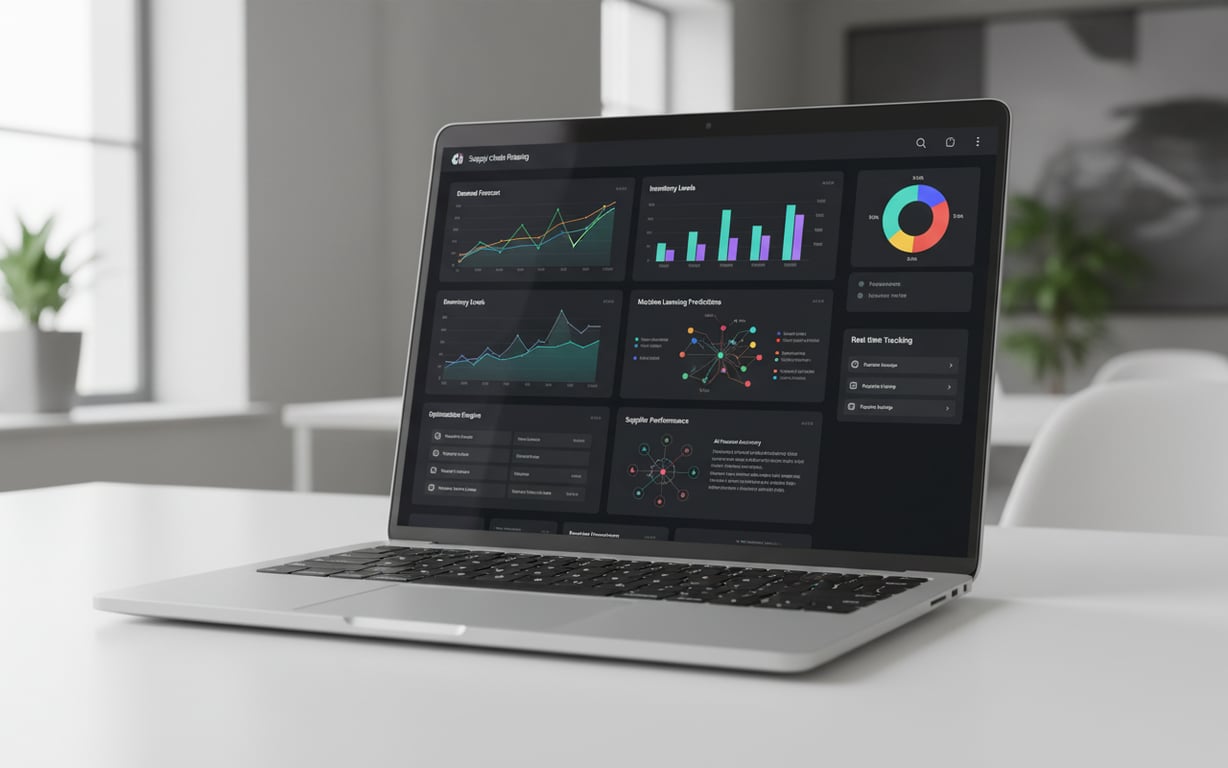
Artificial intelligence and machine learning: Improve forecast accuracy through pattern recognition in large datasets, automate routine replenishment decisions, detect anomalies that signal emerging disruptions, and generate natural-language explanations of planning recommendations that help planners understand and trust algorithmic outputs.
Robotic process automation (RPA) and workflow orchestration: Reduce the manual effort required to gather, clean, and distribute planning data — freeing planners to focus on exception management and strategic analysis rather than spreadsheet maintenance.
Supply network planning platforms: Connect buyers and suppliers in a shared digital environment, accelerating information flow and reducing the latency between demand signals and supply responses.
Challenges in end to end supply chain planning
Despite the clear benefits, organizations face significant and recurring obstacles when implementing comprehensive supply chain planning. Recognizing these challenges in advance is the first step toward addressing them effectively.
Data quality and integration:End-to-end supply chain management requires accurate, timely, and consistent data from dozens of internal and external systems — ERP, WMS, TMS, supplier portals, and point-of-sale platforms. In practice, these systems often use different data standards, update at different frequencies, and contain errors that compound when combined. Establishing master data management discipline and investing in data governance before deploying planning tools is essential but frequently skipped in the rush to implement.
Organizational resistance: Planning transformations require people to change how they work, share information they previously controlled, and accept algorithmic recommendations that may conflict with their intuition. Without strong executive sponsorship and a deliberate change management program, resistance from middle management can quietly undermine even technically excellent implementations.
Complexity management: Particularly for large organizations with thousands of SKUs, multiple manufacturing sites, and global distribution networks, the scm process flow involves millions of interdependent decisions. Planning systems must be configured carefully to balance model complexity with computational tractability. Starting with a simplified model and adding complexity incrementally is almost always more successful than attempting to model every constraint from day one.
External volatility: Geopolitical disruptions, supplier failures, and demand shocks test the resilience of even well-designed planning systems. Building scenario planning capabilities and maintaining strategic buffer stocks for critical items are practical mitigations that experienced supply chain leaders prioritize.
Measuring success in your end to end supply chain
Measuring the effectiveness of end to end supply chain optimization requires a balanced scorecard of key performance indicators (KPIs) that spans financial performance, service quality, operational efficiency, and planning process maturity. Tracking the right metrics — and connecting them to planning decisions — is what drives continuous improvement over time, and it is where sales and operations planning meets accountability.
The following table presents the most important KPIs for end-to-end supply chain measurement, along with industry benchmarks and improvement targets:
Forecast Accuracy (WMAPE)
Definition: Weighted mean absolute percentage error of demand forecasts
Industry Average: 25–35%
Best-in-Class: <15%
Inventory Turns
Definition: Cost of goods sold ÷ average inventory value
Industry Average: 6–8×
Best-in-Class: 12–15×
On-Time In-Full (OTIF)
Definition: % of orders delivered on time and complete
Industry Average: 75–85%
Best-in-Class: >95%
Perfect Order Rate
Definition: % of orders delivered on time, complete, undamaged, and correctly invoiced
Industry Average: 70–80%
Best-in-Class: >95%
Cash-to-Cash Cycle Time
Definition: Days from cash paid to suppliers to cash received from customers
Industry Average: 45–60 days
Best-in-Class: <30 days
Supply Chain Cost as % of Revenue
Definition: Total supply chain operating costs ÷ revenue
Industry Average: 8–12%
Best-in-Class: 5–7%
Beyond tracking individual KPIs, organizations should establish a regular cadence of performance reviews that connect metric trends to specific planning decisions. When forecast accuracy declines, the root cause analysis should trace back to the demand planning process — was it a new product introduction, a promotional event, or an external market shock? When inventory turns deteriorate, the investigation should examine safety stock policies, supplier lead time variability, and S&OP decision quality. This closed-loop approach, reinforced by strong end-to-end visibility, is what separates organizations that continuously improve from those that track metrics without acting on them.
Planning process maturity itself should also be measured, using frameworks such as Gartner's Supply Chain Planning Maturity Model, which assesses organizations across five levels from reactive (Level 1) to autonomous (Level 5). Most organizations operate at Level 2 or 3; advancing to Level 4 — characterized by integrated, data-driven planning with high automation — typically delivers a 20–30% improvement in total supply chain cost efficiency.

Frequently Asked Questions
What is the difference between supply chain management and end to end supply chain planning? Supply chain management is the broad discipline of overseeing the flow of goods, information, and finances from supplier to customer. End to end supply chain planning is a specific approach within that discipline that integrates all planning functions — demand, inventory, production, logistics, and finance — into a single, coordinated process rather than managing each function independently. E2e planning is what makes supply chain management proactive rather than reactive.
How long does it take to implement end to end supply chain planning? A full e2e planning transformation typically takes 2–4 years for large organizations and 12–24 months for mid-market companies. The timeline depends on data readiness, organizational complexity, and the scope of technology changes required. Most organizations achieve meaningful results within the first 6–12 months by focusing on demand planning and S&OP process improvements before tackling more complex optimization initiatives.
What is the ROI of investing in end to end supply chain planning? Organizations that successfully implement e2e supply chain planning typically report 15–25% reductions in inventory investment, 10–20% improvements in on-time delivery, 5–15% reductions in total supply chain cost, and measurable improvements in customer satisfaction scores. The payback period for planning technology investments is typically 12–24 months when implementation is executed effectively.
How does S&OP differ from S&OE (Sales and Operations Execution)? S&OP operates on a monthly planning horizon, aligning strategic demand and supply plans over a 3–18 month window. S&OE operates on a weekly or daily horizon, managing the execution of the S&OP plan in real time and resolving short-term imbalances between supply and demand. Both processes are essential in a mature e2e planning framework, with S&OE serving as the operational bridge between the monthly S&OP plan and daily execution.
What data is needed to support end to end supply chain planning? The core data requirements include historical sales and demand data (at least 2–3 years at the SKU-location level), current inventory positions across all nodes, supplier lead times and capacity constraints, production schedules and capacity data, logistics costs and carrier performance data, and financial targets including margin and working capital goals. Data quality — accuracy, completeness, and timeliness — matters more than data volume.
How does demand forecasting accuracy affect inventory levels? Forecast accuracy directly determines the safety stock required to maintain a given service level. The mathematical relationship is well-established: safety stock is proportional to the standard deviation of forecast error. A 10-percentage-point improvement in forecast accuracy (e.g., from 30% MAPE to 20% MAPE) typically enables a 15–20% reduction in safety stock while maintaining the same fill rate. This translates directly into lower inventory carrying costs and improved cash flow.
What is a supply chain control tower and do I need one? A supply chain control tower is a centralized platform that aggregates real-time data from across the supply chain — orders, shipments, inventory, supplier status — and presents it in a unified operational view with exception alerts and recommended actions. Organizations with complex, multi-tier supply chains and high disruption exposure benefit most from control tower capabilities. Smaller organizations can achieve similar visibility through well-integrated ERP and WMS systems without a dedicated control tower platform.
How do I choose the right supply chain planning software? The selection should be driven by your specific planning challenges, existing technology landscape, and organizational maturity. Key evaluation criteria include functional coverage (demand, inventory, S&OP, network optimization), integration capabilities with your ERP and operational systems, scalability, total cost of ownership, and vendor support quality. Leading platforms include SAP IBP, Kinaxis, o9 Solutions, Blue Yonder, and Oracle Supply Chain Planning. A structured RFP process with defined use cases and a proof-of-concept evaluation is strongly recommended before committing to any platform.
What role does artificial intelligence play in supply chain planning? AI enhances supply chain planning in several high-value areas: improving forecast accuracy through machine learning models that detect complex demand patterns, automating routine replenishment and procurement decisions, identifying supply disruption risks before they materialize, and generating scenario analyses that would take human planners days to produce manually. AI is most effective when applied to well-defined planning problems with sufficient historical data — it amplifies good planning processes but cannot compensate for poor data quality or unclear decision-making frameworks.
How do I build organizational buy-in for a supply chain planning transformation? Building buy-in requires demonstrating the financial impact of current planning gaps (the cost of poor forecasting, excess inventory, or missed service targets), securing executive sponsorship at the C-suite level, involving frontline planners and managers in the design of new processes, and celebrating early wins publicly. Change management investment — typically 15–20% of total project budget — is consistently underfunded in supply chain transformations and consistently cited as a top factor in implementation failures. Treat the human dimension of the transformation with the same rigor as the technical dimension.


Comments