
Food & Beverage Supply Chain Best Practices for Smarter Beverage Production
- Andra Palade

- Aug 4
- 11 min read
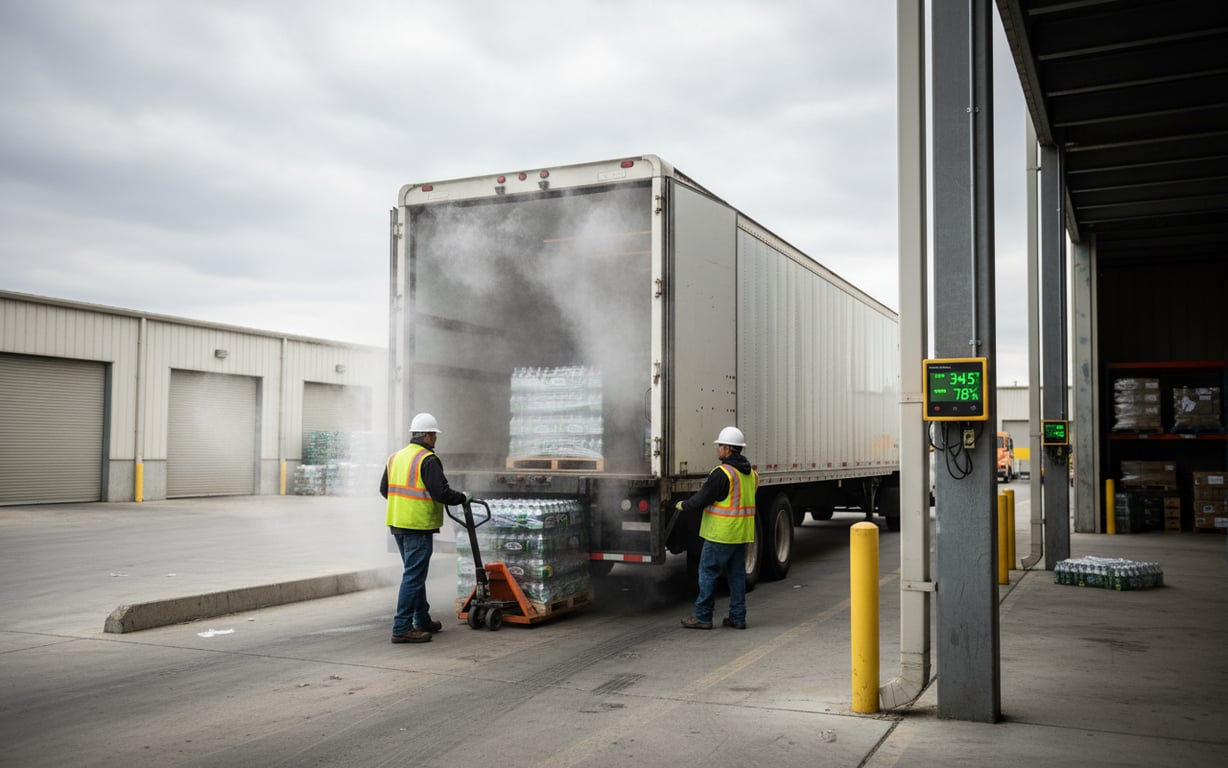
Beverage manufacturers face a unique set of supply chain challenges, from perishable ingredients and cold chain requirements to volatile demand and strict regulatory compliance. As disruptions become more frequent and consumer expectations continue to rise, leading companies are adopting advanced planning, forecasting, and operational excellence practices to build more resilient, efficient, and responsive supply chains.
Beverage manufacturing supply chain management coordinates procurement, production, cold chain logistics, and multi-channel distribution under tighter physical, regulatory, and scheduling constraints than most other food and beverage supply chain models. Best practices center on unified planning systems, supplier diversification, machine learning demand forecasting, lean filling line optimization, end-to-end traceability, and resilience strategies that keep operations running when upstream disruptions occur.
Table of Contents
Raw material sourcing and supplier relationship management in beverage production
Demand forecasting and inventory management for beverage manufacturers
Technology and traceability systems in beverage supply chain management
Supply chain resilience strategies and risk reduction for beverage companies
Key takeaways for optimizing your beverage production supply chain
What is beverage manufacturing supply chain management
Beverage manufacturing supply chain management is the end-to-end coordination of people, processes, and technology required to move a drink from raw ingredient sourcing to the moment it reaches a consumer's hand. Within the broader food and beverage supply chain, this specialized discipline spans procurement, blending and processing, bottling or canning, warehousing, and multi-channel distribution to retailers, distributors, and foodservice operators.
What sets beverage production apart from other food and beverage supply chain models is the combination of physical and regulatory constraints unique to liquids. Manufacturers must manage heavy, bulky products, fragile packaging formats, and strict temperature requirements that protect product integrity from the moment liquid enters a tank to the final delivery mile. Tank capacity planning adds another layer of complexity: a tank is considered fully committed the moment product is allocated to it, even if only partially filled, which constrains scheduling flexibility. Filling lines must also absorb frequent changeovers between SKUs, flavors, and packaging formats without excessive downtime.
Applying supply chain best practices in beverage production increasingly means retiring fragmented spreadsheets in favor of unified, automated planning systems that support real-time inventory visibility and cyclic scheduling.
What makes beverage supply chain management distinct
Physical constraints: Heavy, bulky finished goods and fragile packaging formats require specialized handling and transportation infrastructure.
Temperature requirements: Strict thermal controls must be maintained from tank filling through the final delivery mile.
Tank capacity planning: A tank is considered fully committed the moment product is allocated to it, even if only partially filled, constraining scheduling flexibility.
Filling line complexity: Lines must absorb frequent changeovers between SKUs, flavors, and packaging formats without excessive downtime.
Regulatory oversight: Beverage producers operate under food safety and sanitary transportation rules that add compliance layers absent in many other supply chain models.
Raw material sourcing and supplier relationship management in beverage production
Securing high-quality ingredients and packaging materials calls for a disciplined, proactive approach to raw material sourcing for beverage production. Manufacturers need full visibility into primary ingredients, sub-ingredients, and packaging components such as aluminum coil, glass, or PET resin, so they can spot vulnerabilities before a labor dispute, natural disaster, or facility fire disrupts the flow of materials. Supplier diversification is one of the most effective safeguards against this exposure, preventing total dependence on a single source, region, or logistics lane.
Why supplier diversification is critical in beverage manufacturing
Supplier diversification matters because disruptions rarely announce themselves in advance. An upstream plant fire, a sudden tariff change, or a regional labor shortage can threaten material availability overnight. By qualifying alternative suppliers across different geographies and maintaining a documented contingency plan, beverage manufacturers can pivot quickly without halting production lines or compromising quality specifications.
Strong supplier relationship management in the beverage industry also plays a preventive role. Open, ongoing communication allows manufacturers to anticipate pricing shifts, negotiate stocking agreements, and lock in material costs ahead of market volatility. Many operations are replacing manual spreadsheets with centralized supplier management platforms that automate compliance tracking, store supplier qualification documents, and verify that incoming ingredients consistently meet food safety and quality standards. This kind of structured collaboration, discussed further in resources on retail operations and supplier collaboration, helps formalize what was once an informal, reactive relationship into a measurable operational discipline.
Supplier relationship management best practices
Supplier diversification: Qualify alternative suppliers across different geographies to prevent dependence on a single source, region, or logistics lane.
Contingency planning: Maintain a documented contingency plan so production lines can pivot quickly when a disruption occurs.
Proactive communication: Open, ongoing dialogue allows manufacturers to anticipate pricing shifts and negotiate stocking agreements ahead of market volatility.
Centralized compliance tracking: Replace manual spreadsheets with supplier management platforms that automate qualification documents and verify food safety standards.
Cost locking: Secure material costs in advance to reduce exposure to sudden tariff changes or commodity price swings.

Demand forecasting and inventory management for beverage manufacturers
Achieving strong beverage industry supply chain efficiency requires moving away from static spreadsheets toward predictive technologies capable of handling volatile demand. Machine learning applied to demand forecasting for beverage production allows planners to account for short-term variables such as weather shifts, holidays, and promotional campaigns. Unlike traditional statistical models, machine learning continuously reprocesses fresh data and can flag product cannibalization between similar SKUs, helping teams avoid both costly overproduction and sudden stockouts during demand spikes. Manufacturers evaluating their forecasting maturity often benchmark against frameworks described in guidance on measuring and improving forecast accuracy, since forecast error directly drives safety stock requirements.
Modernizing inventory management for beverage manufacturers is equally critical, particularly given bulky finished goods and tight expiration windows. Rather than relying on a fixed number of days of coverage, advanced modeling dynamically calculates safety stock based on demand variability, forecast accuracy, and holding costs. This approach, often supported by dedicated inventory and replenishment platforms, helps minimize slow-moving and obsolete inventory through timely markdowns and targeted promotions before products approach their expiration dates.
Which supply chain metrics matter most for beverage producers
Producers should track a focused set of metrics to drive continuous improvement:
Fill rates and inventory accuracy: Measure how reliably orders are fulfilled and whether on-hand stock counts match system records.
On-time shipment performance: Track the percentage of deliveries reaching customers within the committed window.
Case rejection and spoilage percentages: Identify quality failures at the point of receipt or during distribution that erode margin.
Temperature deviation events within the cold chain: Monitor excursions that risk product integrity and regulatory non-compliance.
Monitoring these indicators through a unified system enables fact-based decisions that optimize warehouse space and streamline distribution networks.
Cold chain management and its impact on beverage quality
What is cold chain management in beverage distribution
Cold chain management in beverage distribution refers to a temperature-controlled logistics process designed to keep goods within a defined, consistent range from production through final delivery. Perishable drinks such as fresh juices, kombucha, and dairy-based beverages depend on robust cold chain discipline to remain safe and appealing to consumers. A brief temperature excursion, whether caused by a malfunctioning reefer unit, a pallet left on a warm dock, or a delay at a cross-dock facility, can spoil an entire shipment, resulting in lost inventory, wasted freight spend, and eroded retailer trust.
How cold chain management affects beverage quality
Temperature excursions: Even brief deviations caused by equipment failure or dock delays can spoil an entire shipment and erode retailer trust.
Regulatory responsibility: Under the Sanitary Transportation Rule, manufacturers share responsibility for temperature conditions throughout transit, making systematic verification non-negotiable.
Shelf life protection: Consistent temperature control directly extends the usable shelf life of perishable beverages, reducing waste and returns.
Real-time monitoring: Telematics systems that record conditions continuously allow producers to catch deviations before they compromise a full shipment.
Best practices for maintaining temperature integrity
Use specialized refrigeration equipment rated for the specific temperature range required by each beverage category.
Pre-cool products before loading to reduce thermal stress during transport.
Deploy continuous telematics monitoring that records temperature conditions in real time throughout transit.
Apply real-time tracking and data analytics to manage exceptions proactively and adjust routes to reduce transit times.
Establish systematic verification protocols to satisfy Sanitary Transportation Rule requirements and document compliance.
Transportation optimization for beverage distribution also means balancing temperature safety with delivery speed. Real-time tracking and data analytics allow producers to manage exceptions proactively, adjust routes to reduce transit times, and catch temperature deviations before they compromise a shipment. This disciplined approach protects both product freshness and the manufacturer's bottom line.
Lean manufacturing principles in beverage production
Applying lean manufacturing principles in beverage production helps identify and eliminate operational inefficiencies, resulting in faster production times and lower unit costs. Historically, the industry favored long, uninterrupted production runs, but modern agility demands smaller batch sizes and faster changeovers so manufacturers can meet fluctuating customer demand without exceeding inventory allowances or accumulating excess stock.
How lean principles improve filling line efficiency
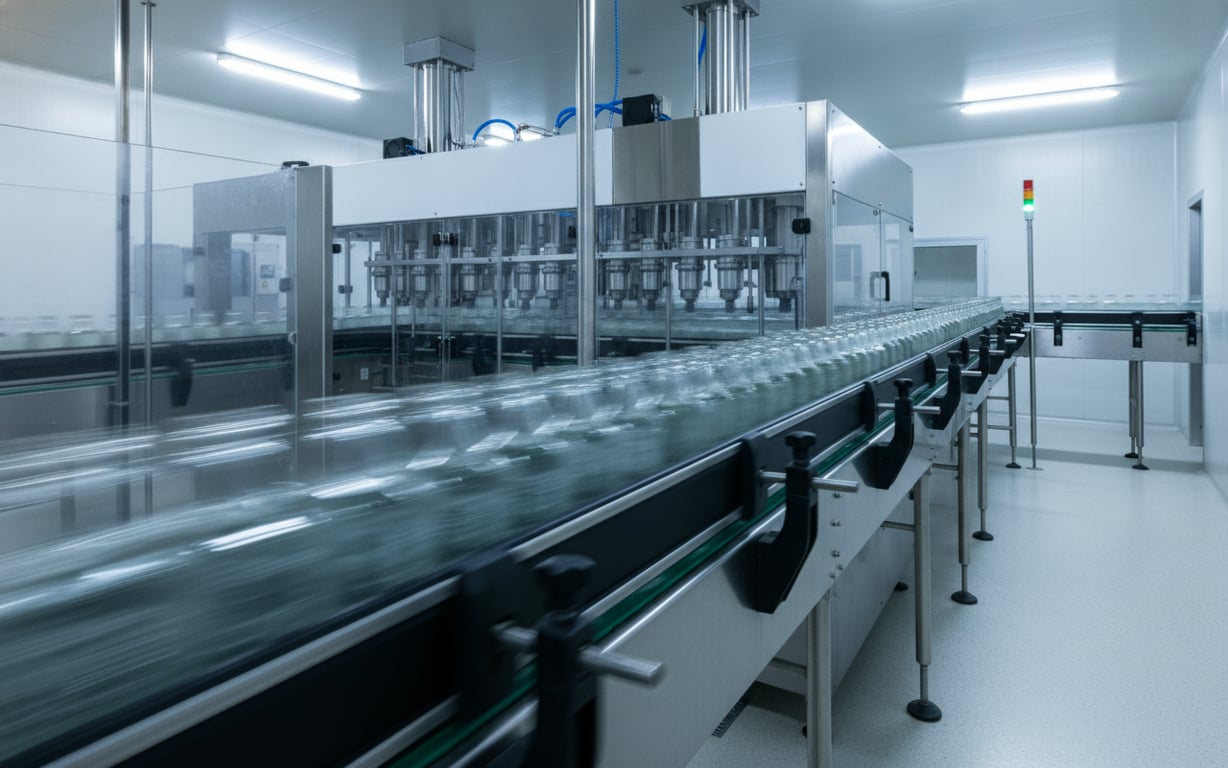
Filling line optimization is central to maximizing beverage industry supply chain efficiency. Reducing cleaning and setup times during complex liquid and packaging changeovers directly cuts downtime. Structured frameworks such as a product wheel or cyclic planning help sequence high- and low-demand products efficiently, while methodologies like the Run-to-Target accelerator and Integrated Work Systems synchronize the workforce under a single operating model. Facilities that adopt these approaches often coordinate them through AI-driven manufacturing planning tools.
Smaller batch sizes: Enable manufacturers to meet fluctuating demand without accumulating excess stock or exceeding inventory allowances.
Cyclic planning and product wheel sequencing: Efficiently order high- and low-demand products to minimize line idle time between runs.
Reduced changeover times: Cutting cleaning and setup time during liquid and packaging changeovers directly reduces downtime and increases available production hours.
Run-to-Target and Integrated Work Systems: Synchronize the workforce under a single operating model for consistent throughput.
Just-in-time inventory: Aligns production directly with real-time demand data, minimizing waste and optimizing tank utilization.
Just-in-time inventory systems complement these lean efforts by aligning production directly with real-time demand data, helping beverage producers minimize waste, optimize tank utilization, and sustain continuous, cost-effective operations on the plant floor.
Technology and traceability systems in beverage supply chain management
The role of technology in beverage supply chain management becomes clear when looking at the industry-wide shift from fragmented spreadsheets to unified, automated platforms. Modern beverage manufacturing supply chain management relies on artificial intelligence and machine learning to analyze historical sales data alongside short-term variables like weather and promotions, refining production scheduling accordingly. Internet of Things devices and automated warehousing systems monitor environmental conditions in real time, while Electronic Data Interchange enablement automates document exchange, eliminating manual errors and improving visibility across the food and beverage supply chain.
What is the role of technology in beverage supply chain management
AI and machine learning: Analyze historical sales data alongside short-term variables like weather and promotions to refine production scheduling.
Internet of Things devices: Monitor environmental conditions in real time across warehouses and transport vehicles.
Automated warehousing systems: Reduce manual handling errors and improve inventory accuracy throughout the distribution network.
Electronic Data Interchange: Automates document exchange between supply chain partners, eliminating manual errors and improving end-to-end visibility.
Cloud-based ERP modules: Integrate traceability data, supplier records, and production schedules into a single accessible platform.
How traceability systems for beverage ingredients support compliance and recall readiness
Traceability systems for beverage ingredients are equally essential for regulatory compliance and public health protection. Under frameworks such as FSMA Rule 204, manufacturers must track Critical Tracking Events and Key Data Elements using global standards like GS1 EPCIS. By integrating cloud-based ERP modules, barcode scanning, or RFID technology, producers can establish seamless one-up, one-back traceability, a digital thread linking incoming raw materials and sub-ingredients directly to finished product lot codes and outbound shipments. This connectivity allows companies to execute precise mock recalls and isolate affected inventory within hours rather than days.
Image suggestion: A schematic diagram tracing beverage ingredients from intake to finished shipment.
Supply chain resilience strategies and risk reduction for beverage companies
Protecting operations from unexpected upstream disruptions, such as fires at major raw material processing plants that ripple down through two or more supplier tiers, requires proactive supply chain resilience strategies for beverage companies. When evaluating how beverage companies can reduce supply chain risks, establishing a diversified supplier base across different geographies stands out as a foundational step. This diversification allows producers to pivot quickly, such as arranging alternative port intake or temporary overflow warehousing when primary material flows are interrupted. Locking in stocking agreements and prebuying critical materials ahead of anticipated market shifts also helps keep inventory within comfortable risk tolerances.
How beverage companies can reduce supply chain risks
Geographic supplier diversification: Qualifying suppliers across multiple regions prevents a single disruption from halting material flow entirely.
Stocking agreements and prebuying: Locking in critical materials ahead of anticipated market shifts keeps inventory within comfortable risk tolerances.
Alternative port intake and overflow warehousing: Pre-arranged contingency logistics allow producers to pivot quickly when primary material flows are interrupted.
Modal flexibility in transportation: Shifting predictable volume from over-the-road trucking to rail networks eases pressure on constrained lanes when container capacity allows.
Flexible warehousing models: Scalable storage arrangements without long-term lease commitments allow brands to adjust their footprint as demand fluctuates.
Real-time tracking and agile routing: Combining live shipment visibility with dynamic routing helps producers bypass localized bottlenecks and protect delivery continuity.
Flexible logistics management supports beverage industry supply chain efficiency during disruptions. Transportation optimization for beverage distribution can involve shifting predictable volume from over-the-road trucking to rail networks when container capacity allows, easing pressure on constrained lanes. Flexible warehousing models that let brands scale storage footprint up or down without long-term lease commitments add another layer of adaptability. Combining real-time tracking with agile routing helps beverage producers bypass localized bottlenecks, protect margins, and maintain continuous product delivery to distributors and retailers even when conditions shift unexpectedly.
Key takeaways for optimizing your beverage production supply chain
Building supply chain best practices in beverage production starts with replacing fragmented spreadsheets with unified, automated planning systems. Protecting the broader food and beverage supply chain from upstream disruptions depends heavily on supplier diversification paired with proactive relationship management. Lean manufacturing principles, including smaller batch sizes, cyclic planning, and filling line optimization, directly drive beverage industry supply chain efficiency by reducing changeover downtime and minimizing excess inventory. Advanced technology, from machine learning demand forecasting to robust traceability systems, ensures regulatory compliance and protects product quality throughout distribution. Establishing a structured Sales and Operations Planning framework ties these efforts together, aligning cross-functional teams around shared data and enabling long-term operational resilience across the entire beverage production network.
Frequently Asked Questions
What is the difference between supply chain management and logistics in beverage production? Supply chain management encompasses the full network of sourcing, production, and distribution decisions, while logistics refers specifically to the physical movement and storage of goods within that broader network.
Why do beverage manufacturers need tighter inventory controls than other food producers? Beverages combine bulky, heavy finished goods with strict expiration windows and temperature sensitivity, which limits storage flexibility and increases the cost of forecasting errors compared to shelf-stable products.
How often should beverage companies review their supplier base? Most manufacturers benefit from a formal supplier review at least annually, with more frequent check-ins on critical raw materials that carry higher disruption risk.
What causes the most common cold chain failures? Equipment malfunctions, extended dock wait times, and gaps during cross-dock transfers are among the most frequent points where temperature control breaks down.
Can small and mid-sized beverage producers apply lean manufacturing principles? Yes, techniques such as reduced changeover times and cyclic production planning scale down effectively and often deliver proportionally larger efficiency gains for smaller operations with limited line capacity.
What is the purpose of a mock recall exercise? A mock recall tests whether a company's traceability systems can accurately identify and isolate affected inventory within a target timeframe, validating readiness before a real recall event occurs.
How does machine learning improve demand forecasting compared to traditional methods? Machine learning models continuously incorporate new data such as weather and promotional activity, allowing them to adapt to short-term demand shifts more responsively than static historical models.
What role does GS1 EPCIS play in beverage traceability? GS1 EPCIS provides a standardized data format for recording supply chain events, enabling different companies and systems to share traceability information consistently across the network.
Why is transportation flexibility important for beverage distribution? Shifting volume between trucking, rail, or alternative warehousing options allows producers to bypass capacity constraints and localized disruptions without halting deliveries to retailers.
What is Sales and Operations Planning and why does it matter for beverage producers? Sales and Operations Planning is a structured process that aligns sales forecasts, production capacity, and inventory strategy across departments, supporting more consistent, data-driven decision-making company-wide.


Comments