
Grocery Planning from Forecast to Fulfillment: Demand Forecasting Solutions & Inventory Management Best Practices

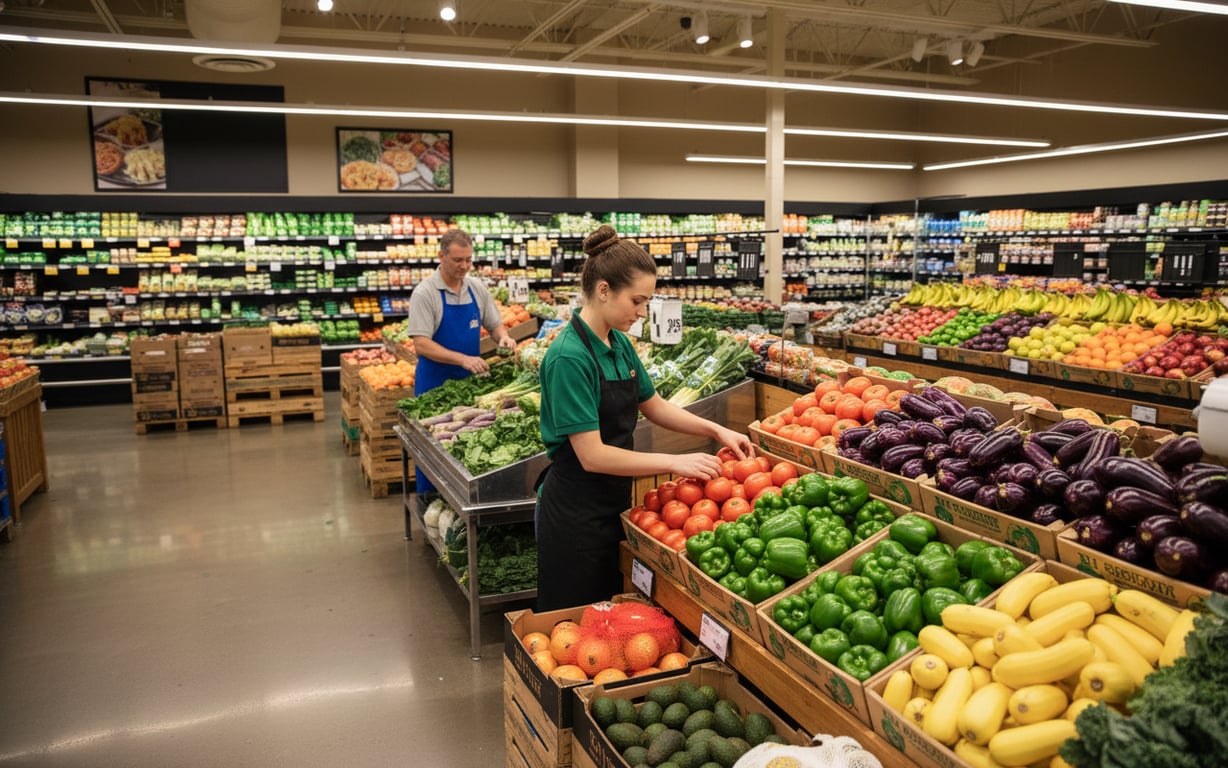
Grocery planning from forecast to fulfillment describes the end-to-end operational framework that connects customer demand signals to the physical movement of goods across a retail supply chain. It begins with a statistical estimate of what shoppers will buy and ends with the right product sitting on a shelf, in a fulfillment locker, or in a delivery van at the moment a customer wants it. Because grocery margins are notoriously thin, every gap in this chain — a late truck, an under-forecasted promotion, a stockout on a fresh item — translates directly into lost revenue or wasted inventory.
Table of Contents
What is grocery planning from forecast to fulfillment
What is the difference between demand forecasting and demand planning?
Honestly, this is where I see grocers trip up most often. The two terms get thrown around interchangeably, but they do very different jobs. Demand forecasting is the analytical process of generating a statistical estimate of future demand for a given product, store, and time period. Demand planning is the broader operational discipline that takes those forecasts and turns them into action: replenishment orders, shelf space allocation, labor scheduling, and distribution center capacity decisions. Forecasting answers how much will sell; planning answers how that demand will actually be met. Grocers that treat these as a single, muddled exercise usually struggle with both waste and availability. The ones who manage them as sequential, integrated stages build a foundation for consistent, profitable execution — and, frankly, a lot fewer late-night calls about empty shelves.
How a demand forecast model works in grocery retail
A modern demand forecast model in grocery retail works by ingesting large volumes of historical and real-time data and converting it into a granular, actionable prediction — typically at the day, SKU, and store level. The starting point is almost always point-of-sale data for demand planning: transaction-level records that reveal exactly what sold, when, at what price, and under what promotional conditions. That data feeds a mathematical engine that goes far beyond simple historical averaging.
Rather than relying on static time-series calculations alone, contemporary demand prediction models use machine learning to automatically clean noisy datasets, flag outliers such as data-entry errors or stockout-distorted sales, and fill gaps where information is missing. New product introductions are especially tricky because there's no sales history to draw from; leading systems handle this through attribute-based profiling, matching a new item's brand, pack size, category, and price point to a comparable reference product to generate an initial forecast blueprint.
Key inputs that power a grocery demand forecast model
Point-of-sale data: Transaction-level records revealing what sold, when, at what price, and under what promotional conditions.
Internal business decisions: Price changes, promotional mechanics, and endcap placements that directly shape consumer purchasing.
External drivers: Local weather, school holidays, and regional events that influence localized demand patterns.
Assortment dynamics: Cannibalization effects, where a promoted item reduces the baseline sales of a similar product on the same shelf.
Attribute-based profiling: Matching new product introductions to comparable reference products to generate an initial forecast blueprint with no sales history.
The best-performing systems avoid opaque "black box" outputs, instead giving planners visibility into how each forecast component was calculated. That transparency lets human experts validate results, adjust for local knowledge, and trust the forecast enough to automate downstream replenishment — a topic explored in depth in this guide to measuring and improving retail forecast accuracy.
Demand forecasting solutions and planning models compared
Retailers evaluating inventory forecasting tools for grocery retailers should look closely at how each solution handles different product lifecycles. Ultra-fresh categories — meat, produce, bakery, dairy — carry high spoilage risk and demand highly responsive, probabilistic forecasting that weighs the cost of waste against the cost of a stockout on a daily, store-specific basis. Center-store, ambient goods with longer shelf lives benefit more from leveled inventory flows that optimize warehouse throughput and reduce handling costs.
Seasonal demand planning for retailers is another area where tool selection really matters. Where traditional systems require planners to manually flag upcoming holidays or weather events, AI-driven platforms can automatically detect statistical relationships between external drivers and localized sales history, then apply an ensemble of forecasting methods to scale safety stock up or down as conditions shift. Retailers comparing options should consult a structured overview such as this complete guide to retail forecasting methods to understand which technique fits which category and season before committing to a platform.
Grocery inventory management best practices for reducing waste and stockouts
Sound grocery inventory management best practices exist primarily to protect two things simultaneously: product availability and profit margin. Those goals pull in opposite directions unless managed with precision, which is why leading grocers have moved away from static inventory buffers toward dynamic safety stock calculation for grocery stores. Because demand fluctuates predictably within a week — weekend spikes in fresh meat and produce, weekday lulls in certain categories — a fixed safety stock level almost guarantees one of two outcomes: excess stock and spoilage on slow days, or stockouts during peak demand. Dynamic models instead recalculate safety stock based on weekday-specific sales patterns and the historical accuracy of the forecast itself, applying a cost-benefit calculation that weighs the financial impact of waste against the financial impact of a lost sale.
How grocery stores can reduce food waste through better forecasting
This directly answers one of the most pressing questions grocery operators face: how can grocery stores reduce food waste through better forecasting? The answer lies largely in moving from historical averages to probabilistic, distribution-based forecasts at the day-SKU-store level. Rather than predicting a single number, advanced models predict a full range of likely outcomes and their probabilities, which allows planners to set order quantities that match the true risk profile of each item — ordering tighter for highly perishable goods and maintaining slightly more buffer for slower-decaying products.
Proven inventory management practices for grocery retailers
Dynamic safety stock calculation: Recalculate safety stock based on weekday-specific sales patterns and historical forecast accuracy, rather than applying a fixed buffer across all days.
Probabilistic, distribution-based forecasting: Predict a full range of likely demand outcomes and their probabilities to set order quantities that match the true risk profile of each item.
Proactive seasonal buffer building: Build buffer stock ahead of known seasonal peaks — such as holiday baking ingredients or summer grilling meats — to support secondary displays while smoothing distribution center delivery volumes.
Post-season inventory ramp-down: Proactively reduce seasonal inventory as peaks end to prevent post-season obsolescence and margin erosion.
Automated replenishment tools: Use dedicated inventory and replenishment solutions to automate dynamic safety stock calculations and reduce reliance on manual planning cycles.
Retailers looking to formalize these practices often turn to dedicated inventory and replenishment solutions that automate the dynamic safety stock calculations described above.
Connecting demand planning to the order fulfillment process in retail
An accurate forecast only creates value once it's translated into an efficient order fulfillment process in retail. Traditional supply chains often isolate store-level replenishment from distribution center planning, forecasting DC requirements from historical outbound shipment volumes rather than from what stores actually need next. That disconnect creates costly mismatches: distribution centers overstock some items while running short on others, and stores receive deliveries that don't match real-time shelf conditions.
A properly integrated model of grocery planning from forecast to fulfillment resolves this by basing distribution center forecasts directly on stores' projected orders, which combine pull-based consumer demand with planned, push-based stock movements such as promotional allocations. Inventory ends up positioned correctly before a customer ever reaches for a product, whether that customer is standing in a physical aisle or checking out online.
Omnichannel fulfillment adds further complexity that inventory forecasting tools for grocery retailers must address directly. Click-and-collect, curbside pickup, and home delivery each follow different demand patterns than traditional in-store shopping, so sophisticated systems maintain separate channel-level forecasts and apply virtual ringfencing at the distribution center to protect inventory allocated to each channel. That prevents the frustrating cycle of canceled online orders or last-minute substitutions that damage customer trust.
How demand planning connects to fulfillment execution
Generate store-level projected orders from consumer demand signals and planned promotional allocations, rather than from historical DC shipment volumes.
Use store-level projected orders to drive distribution center forecasts, ensuring inventory is positioned correctly before customers reach for a product.
Maintain separate channel-level forecasts for click-and-collect, curbside pickup, and home delivery, and apply virtual ringfencing at the DC to protect inventory allocated to each channel.
Integrate demand planning models directly with store planograms to automatically trim order quantities so deliveries fit available shelf space, reducing backroom congestion and labor costs.
Layer in logistics strategies such as cross-docking and pick-to-zero to move high-velocity, ultra-fresh items from supplier to shelf with minimal handling.
Retailers seeking to strengthen this operational layer often invest in dedicated retail operations and collaboration tools that connect planners, store teams, and suppliers around a shared execution plan.
AI and machine learning in modern demand forecast models
The sheer volume of multi-channel data generated by modern grocery retail — transaction records, loyalty data, weather feeds, promotional calendars — has made manual forecasting analysis practically impossible at scale. This is where artificial intelligence and machine learning have become central to demand forecasting solutions, processing enormous datasets and recalculating forecasts continuously rather than on a periodic manual cycle. Unlike legacy systems built on static time-series formulas, a machine learning-based demand forecast model automatically detects and corrects noisy or incomplete data, and, as noted earlier, uses attribute-based profiling to generate reasonable forecasts for new product introductions with no sales history.
What AI-driven demand prediction models evaluate simultaneously
Promotional mechanics and price elasticity: Internal decisions that directly shift consumer purchasing behaviour at the SKU and store level.
Regional weather and local events: External drivers that create localized demand spikes or troughs not visible in historical averages alone.
Cannibalization and halo relationships: Assortment effects between related products that traditional statistical methods cannot model accurately at scale.
Probability distributions of demand: Neural network architectures predict full demand ranges rather than single-point estimates, which is especially valuable for fresh categories where over- and under-ordering costs must be balanced daily.
Transparent forecast construction: Best-in-class platforms allow planners to trace exactly how an AI-generated forecast was built, override it where local knowledge applies, and automate routine replenishment with confidence.
Grocers adopting these tools typically see measurable gains in forecast accuracy, which cascades into fewer stockouts, reduced markdown and waste costs, and lower overall safety stock requirements since less buffer is needed to compensate for forecast error.
Building a resilient grocery planning strategy from forecast to fulfillment
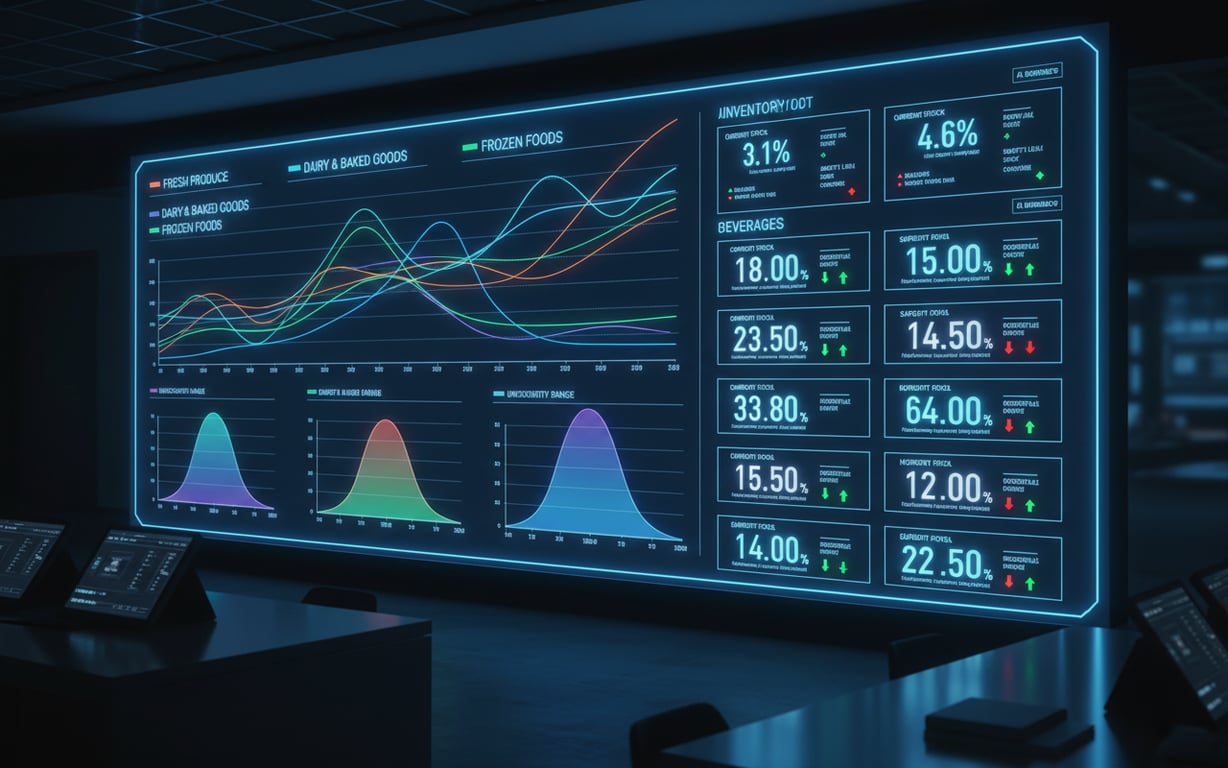
Building genuine resilience into grocery planning from forecast to fulfillment requires unifying operations that are traditionally siloed. Retailers that replace disconnected, reactive systems with integrated demand forecasting solutions gain the ability to ingest multi-channel data, clean it automatically, and generate consistently accurate, probabilistic forecasts that feed every downstream decision — from store ordering to distribution center capacity planning.
Steps to build a resilient integrated grocery planning strategy
Replace disconnected, reactive systems with integrated demand forecasting solutions that ingest multi-channel data, clean it automatically, and generate probabilistic forecasts feeding every downstream decision.
Apply grocery inventory management best practices consistently rather than as one-time projects, using dynamic, forecast-error-aware inventory models that adjust continuously under volatile conditions.
Embed seasonal demand planning for retailers to absorb known volatility — holidays, weather-driven demand swings, regional events — proactively rather than reactively.
Align planogram data, replenishment cycles, and distribution capacity within a single connected framework so inventory is positioned precisely where and when it will be needed.
The retailers that invest in this level of integration consistently protect margin more effectively and maintain stronger customer loyalty than those still operating forecasting, planning, and fulfillment as separate, disconnected functions.
Frequently asked questions about grocery demand forecasting and fulfillment
What is the difference between demand forecasting and demand planning? Forecasting generates statistical estimates of future demand; planning uses those estimates to drive replenishment, space allocation, and fulfillment decisions.
How does demand forecasting work in grocery retail? It analyzes historical sales, promotions, and external factors like weather to produce day-SKU-store level demand predictions.
How can grocery stores reduce food waste through better forecasting? By using probabilistic, machine learning-based forecasts instead of static averages to align orders with actual fresh product consumption.
Why is dynamic safety stock calculation important for grocery stores? Fixed safety stocks cause weekday waste or weekend stockouts; dynamic calculations adjust to weekday sales patterns and forecast error.
What data feeds a demand forecast model? Point-of-sale transactions, promotional calendars, pricing history, weather data, and local event information all feed the model.
Which forecasting method works best for fresh grocery items? Probabilistic, distribution-based models suit fresh items best, since they balance spoilage risk against stockout risk daily.
How do demand forecasts connect to distribution center planning? Store-level projected orders, not historical shipment data, should drive distribution center forecasts for accurate inventory positioning.
Can AI forecasting handle new product launches with no sales history? Yes, through attribute-based profiling that matches new items to comparable reference products for an initial forecast.
How does seasonal demand planning reduce post-season waste? It ramps inventory up ahead of seasonal peaks and back down afterward, preventing leftover seasonal stock from becoming obsolete.
What role does omnichannel fulfillment play in grocery forecasting? Click-and-collect, delivery, and in-store demand differ, so accurate forecasting requires separate channel-level forecasts and inventory ringfencing.


Comments