
Retail Technologies That Help in the Age of Disruptions: Innovation, Omnichannel Strategies & the Future of Stores

Retail no longer moves through cycles of stability interrupted by occasional shocks — instability itself has become the operating environment. Geopolitical tensions, labor shortages, tariff volatility, and rapidly shifting consumer expectations now arrive simultaneously, compounding pressure on already thin margins. Understanding which retail technologies that help in the age of disruptions actually deliver measurable resilience has become core strategic work for every store operator.
Table of Contents
Omnichannel retail strategies as a foundation for resilience
Innovation in retail industry - AI, automation, and intelligent operations
Supply chain visibility tools and cloud-based systems for disruption management
Retail workforce management software and the human side of technology
Technology trends in retail - what essential tools look like right now
Building a disruption-ready retail strategy with the right technology stack
Why disruption is now the default in retail
Honestly, I've stopped thinking about retail in terms of cycles. Instability itself has become the operating environment, and store operators I talk to feel it every single week. Geopolitical tensions, labor shortages, tariff volatility, and rapidly shifting consumer expectations now arrive at the same time rather than one at a time, compounding pressure on already thin margins. For anyone running a store, this means innovation in retail industry practices has shifted from a competitive advantage to a baseline requirement for staying in business.
Several forces are converging to create this new normal. Supply chains that once absorbed minor bumps now transmit shocks almost instantly across the network, with vendors, carriers, and last-mile partners each representing a potential point of failure that shows up on the shelf. At the same time, organized retail crime, rising operational costs, and complex tariff structures squeeze profitability from multiple directions.
Layered on top is the acceleration of e-commerce alongside increasingly sophisticated artificial intelligence — digital trends retail leaders can no longer treat as optional experiments. Figuring out which retail technologies that help in the age of disruptions actually move the needle has become core strategic work.
Omnichannel retail strategies as a foundation for resilience
To withstand ongoing market volatility, brands are prioritizing robust omnichannel retail strategies that bridge physical and digital storefronts. A central driver of this shift is the modern consumer's expectation of a unified journey: the average retail shopper in 2025 engages with nearly six touchpoints before completing a purchase, and roughly 73% expect to move fluidly between channels along the way. Implementing digital transformation strategies for retail resilience lets businesses synchronize inventory, logistics, and customer service systems, supporting flexible fulfillment models such as buy-online-pick-up-in-store (BOPIS) and ship-from-store that help absorb supply chain shocks without sacrificing margin.
Physical locations themselves are being reimagined as digital assets. Retailers are deploying advanced in-store technology for customer experience to remove friction and boost operational efficiency — for example, AI-powered checkout systems that reconcile cart contents against receipts, letting shoppers leave stores as much as 23% faster, while electronic shelf labels enable dynamic pricing tied to real-time demand. Getting shelf layouts, planograms, and assortment decisions right is just as critical as the checkout experience, which is why many operators are investing in unified space and assortment planning tools that connect floor plans directly to performance data.
The rapid adoption of contactless payment technology in retail has transformed the point of sale as well. With over half of in-store transactions in 2024 already contactless, mobile wallets, NFC payments, and biometric systems are becoming the expected norm, and digital wallets are projected to account for roughly 49% of global transaction value by 2027 — underscoring why secure, flexible payment infrastructure can no longer be an afterthought.
Key omnichannel capabilities enabling retail resilience
Unified inventory synchronization: Connecting physical and digital channels so stock levels, logistics, and customer service systems operate from a single source of truth.
Flexible fulfillment models: BOPIS and ship-from-store options allow retailers to reroute product when one channel is disrupted, protecting margin and availability.
In-store digital technology: AI-powered checkout systems and electronic shelf labels reduce friction, accelerate throughput, and enable dynamic pricing tied to real-time demand.
Space and assortment planning: Unified tools that connect floor plans directly to performance data ensure shelf layouts and product mix decisions are grounded in live sales signals.
Contactless payment infrastructure: Mobile wallets, NFC payments, and biometric systems meet consumer expectations and future-proof the point of sale as digital wallets approach 49% of global transaction value by 2027.
Innovation in retail industry - AI, automation, and intelligent operations
Ongoing innovation in retail industry frameworks is increasingly anchored in artificial intelligence in retail operations. Rather than functioning as an experimental tool, AI has become a core operational co-pilot: retailers using AI have reported roughly 16% higher sales growth and 134% higher profit growth than peers not leveraging these technologies. This shift is driving hyper-personalization while streamlining backend processes, with the leading generative AI use cases centered on task automation (around 80% of deployments), loss prevention (73%), and data cleansing and accuracy (71%). By consolidating fragmented data sources into unified platforms, retailers can deploy AI systems that observe business conditions, adjust pricing, and manage inventory in near real time — a capability explored in more depth in this guide to retail forecasting methods.
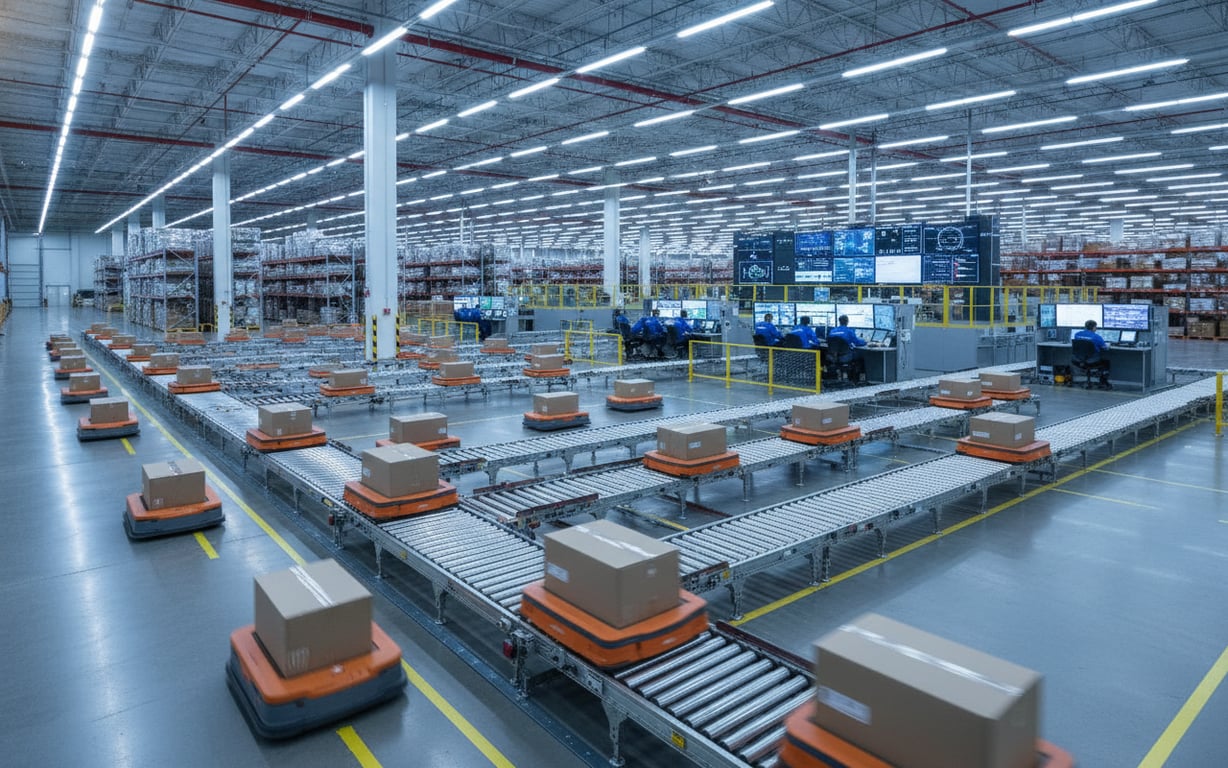
A crucial factor in margin resilience is the rapid adoption of physical and digital automation in retail stores and distribution networks. To offset persistent labor shortages and rising operational costs, retailers are automating routine tasks, with projections suggesting automation could bring efficiency gains to as much as 70% of routine work. So how can retailers use automation to reduce disruption impact in practice? Automated distribution and fulfillment centers can double productivity while using half the labor, and can cut fulfillment costs by roughly 60% — an operational buffer that protects supply chains from sudden labor shocks and transport bottlenecks. For manufacturers supplying these networks, similarly automated production and scheduling planning helps keep upstream output aligned with downstream demand. For the best-positioned retailers, automation can also reduce unit costs by up to 20%, translating into a margin expansion of 50 to 100 basis points.
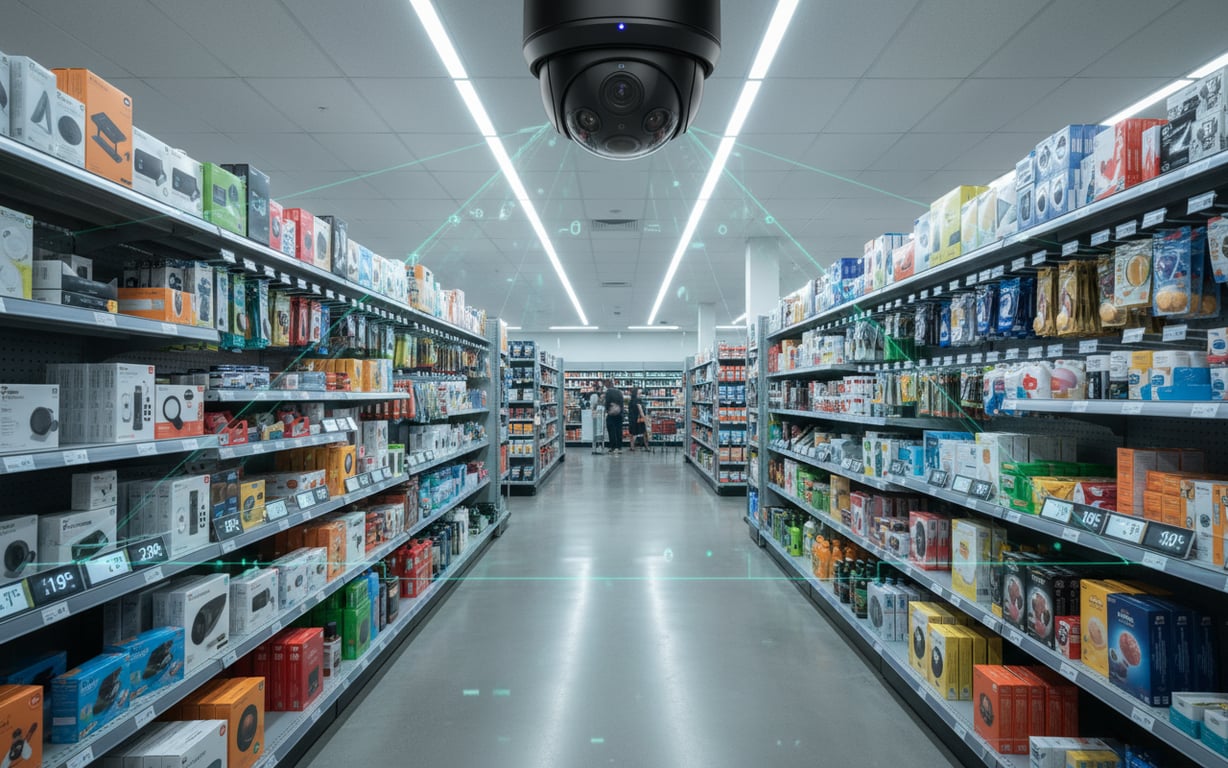
Emerging technologies reshaping retail operations extend to AI-enabled security cameras, smart carts, and electronic shelf labels. Computer vision and intelligent IP cameras are redefining loss prevention by detecting anomalies and flagging after-hours vandalism, while natural-language query tools are democratizing data access so store managers can interrogate massive datasets without technical training — freeing human talent to focus on strategy and customer experience.
How AI and automation deliver measurable resilience
Sales and profit growth: Retailers using AI report roughly 16% higher sales growth and 134% higher profit growth than peers not leveraging these technologies.
Task automation: The leading generative AI use case, deployed in around 80% of implementations, streamlines routine backend processes and reduces manual workload.
Loss prevention: AI-enabled security cameras and exception-based reporting detect anomalies and organized retail crime patterns, directly protecting margins from rising shrink.
Fulfillment efficiency: Automated distribution centers can double productivity while using half the labor, cutting fulfillment costs by roughly 60%.
Unit cost reduction: Automation can lower unit costs by up to 20%, translating into a margin expansion of 50 to 100 basis points.
Democratized data access: Natural-language query tools allow store managers to interrogate large datasets without technical training, freeing human talent for strategy and customer experience.
Supply chain visibility tools and cloud-based systems for disruption management
In an environment where over 76% of European shippers experienced logistics issues throughout 2024 and tariff volatility continues to strain vendor relationships, operational resilience has become paramount. To mitigate these vulnerabilities, operators are deploying supply chain visibility tools for retailers that use artificial intelligence and machine learning not just to track inventory in real time, but to predict and adapt to bottlenecks before they escalate into costly out-of-stock situations. By integrating market data, customer behavior signals, and supply chain variables, these systems answer a critical question — how does technology help retailers manage supply chain disruptions? — by replacing reactive logistics with proactive rerouting and supplier diversification, an approach supported by connected inventory and replenishment solutions.
Central to this defense are cloud-based retail management systems. Cloud-native demand planning solutions provide the scalable infrastructure needed to process massive datasets across channels — in-store, e-commerce, and BOPIS alike. Using sophisticated retail data analytics for demand forecasting, these platforms combine machine learning with statistical modeling, simulation, and heuristics, helping retailers close the data-utilization gap and align inventory with shifting consumption patterns, including sudden pivots toward at-home replenishment.
Real-world retail supply chain disruption case studies illustrate the tangible payoff. Regional grocer Giant Eagle invested in its first micro-fulfillment center to enable faster robotic picking and packing, directly lowering the cost of omnichannel fulfillment. Walmart, meanwhile, used its Trend-to-Product system to shorten fashion production timelines by 18 weeks — a clear demonstration of how unified data and agile operations can bypass traditional bottlenecks and protect margins.
How technology helps retailers manage supply chain disruptions
Technology | Primary function | Disruption benefit |
Supply chain visibility tools | Real-time inventory tracking and bottleneck prediction using AI and machine learning | Enables proactive rerouting and supplier diversification before stockouts occur |
Cloud-based retail management systems | Scalable processing of data across in-store, e-commerce, and BOPIS channels | Faster replenishment decisions and more accurate demand forecasting during volatile periods |
Retail data analytics for demand forecasting | Combines machine learning with statistical modeling, simulation, and heuristics | Closes the data-utilization gap and aligns inventory with shifting consumption patterns |
Micro-fulfillment centers | Robotic picking and packing at a regional scale | Lowers the cost of omnichannel fulfillment and accelerates order throughput |
Unified trend-to-product systems | Connects demand signals directly to production timelines | Shortens production cycles — Walmart reduced fashion timelines by 18 weeks |

Retail workforce management software and the human side of technology
What is retail workforce management software?
Retail workforce management software is a category of digital tools that enables store operators to schedule staff dynamically, reduce labor costs, and maintain service quality during periods of unpredictable demand — combining scheduling flexibility, data access, and task simplification into a single platform that supports both frontline associates and store managers.
While advanced algorithms optimize logistics, people remain the ultimate driver of operational success. Retailers face persistent labor challenges, with turnover in the retail trade reaching around 3.9% in 2024 compared with a 3.6% average across all industries. To address this, forward-thinking brands are investing in retail workforce management software that prioritizes the employee experience. Scheduling flexibility matters enormously here, since roughly 77% of hourly workers say they prefer flexible scheduling; empowering associates with digital tools that offer consistency and simplify complex tasks measurably boosts engagement, and highly engaged workforces are around 23% more profitable and 18% more productive — proof that human-centric technology directly affects the bottom line.
This focus on empowering staff matters most during periods of macroeconomic volatility. Retail technology adoption during supply chain disruptions has accelerated as organizations look to shield frontline operations from external shocks, including the logistics issues affecting the majority of European shippers in 2024. When evaluating which technologies help retailers adapt to market disruptions, tools that democratize data access and simplify daily execution — often bundled into broader retail operations and collaboration platforms — free managers from manual reporting so staff can focus on high-value customer interactions.
Why workforce technology directly affects the bottom line
Scheduling flexibility: Roughly 77% of hourly workers prefer flexible scheduling, and digital tools that deliver it measurably improve retention and engagement.
Profitability impact:Highly engaged workforces are around 23% more profitable and 18% more productive than disengaged ones.
Disruption shielding: Retail technology adoption during supply chain disruptions has accelerated as operators look to protect frontline operations from external shocks.
Democratized data access: Tools that simplify daily execution free managers from manual reporting, allowing staff to focus on high-value customer interactions.
Technology trends in retail - what essential tools look like right now
The current landscape of technology trends in retail is defined by a shift from experimental pilots to genuinely integrated infrastructure. As operators face rising costs, labor shortages, and supply chain volatility, identifying what retail technologies are essential during disruptions has become a primary focus for executive teams. At the core of this modern toolkit are unified data platforms paired with AI that consolidate fragmented data sources into a single real-time intelligence layer, allowing systems to autonomously monitor conditions, adjust pricing, and manage inventory — shielding operations from sudden market shocks.
Store-level efficiency increasingly depends on contactless and automated checkout systems. Electronic shelf labels, smart carts, and biometric payment processing streamline the point-of-sale environment, helping fill labor gaps during seasonal hiring contractions. Equally significant are retail technology innovations for disruption management within security: AI-enabled IP cameras and exception-based reporting systems are redefining loss prevention by detecting anomalies and identifying organized retail crime patterns across channels, directly protecting margins from rising shrink.
These advancements are reshaping retail technology trends for small businesses and mid-market players just as much as large enterprises. While bigger chains often build custom, in-house AI models, smaller retailers increasingly lean on scalable, white-label cloud platforms and off-the-shelf tools. These accessible solutions democratize advanced demand forecasting and retail media capabilities, letting smaller operators monetize first-party shopper data and optimize replenishment with minimal upfront capital.
Essential retail technologies during disruptions — by business size
Technology | Large enterprise approach | Small and mid-market approach |
Unified data platforms with AI | Custom, in-house AI models built on proprietary data infrastructure | Scalable, white-label cloud platforms with off-the-shelf AI tools |
Contactless and automated checkout | Fully integrated biometric payment and smart cart systems | Electronic shelf labels and NFC payment terminals |
AI-enabled security and loss prevention | Enterprise-wide IP camera networks with exception-based reporting | Accessible AI camera solutions monitoring high-risk zones |
Demand forecasting and retail media | Proprietary forecasting engines integrated with supply chain systems | Off-the-shelf forecasting tools and retail media network access |
Building a disruption-ready retail strategy with the right technology stack
Steps to build a disruption-ready retail technology stack
Establish a unified data foundation. Consolidate fragmented sources — POS transactions, inventory levels, and customer profiles — into a single real-time intelligence layer. Strong data governance is critical, since without it, advanced algorithms risk amplifying operational inaccuracies rather than correcting them.
Adopt composable MACH architecture. By implementing Microservices, API-first, Headless, and Composable principles, operators can connect siloed ERP, POS, and CRM systems without costly rip-and-replace overhauls, enabling real-time data streaming and AI-driven decisioning.
Integrate physical store innovation with backend systems. Align edge computing, contactless checkout, and AI-enabled security directly into the unified architecture so in-store and digital operations share the same intelligence layer.
Prioritize continuous innovation over isolated pilots. A composable, data-first stack sustains ongoing innovation in retail industry practices, allowing retailers to deploy new capabilities incrementally rather than through disruptive overhauls.
Execute digital transformation strategies for retail resilience. Position the technology stack to adapt autonomously to volatility — protecting long-term margins and enabling the future of stores as responsive, data-connected nodes within a broader omnichannel network.
To build a disruption-ready retail strategy, executive teams have to move beyond isolated pilots and toward a cohesive, modern technology stack. At its foundation are unified data platforms that consolidate fragmented sources — POS transactions, inventory levels, and customer profiles — into a single real-time intelligence layer. Without strong data governance, though, advanced algorithms risk amplifying operational inaccuracies across autonomous systems rather than correcting them.
Equally significant is the shift toward composable architecture. By adopting MACH (Microservices, API-first, Headless, Composable) principles, operators can connect siloed ERP, POS, and CRM systems without costly rip-and-replace overhauls. This flexible infrastructure supports AI-driven decisioning and real-time data streaming, replacing slow batch processes with near-instant responsiveness.
Aligning backend systems with physical store innovation is essential to executing digital transformation strategies for retail resilience. The future of stores depends on integrating edge computing, contactless checkout, and AI-enabled security directly into this unified architecture. By prioritizing a composable, data-first stack, retailers sustain continuous innovation in retail industry practices — ultimately deploying the retail technologies that help in the age of disruptions to adapt autonomously to volatility while protecting long-term margins.
Frequently Asked Questions
What are the most important retail technologies that help in the age of disruptions? Unified data platforms, AI-driven demand forecasting, automated fulfillment, supply chain visibility tools, and workforce management software together form the core toolkit that helps retailers absorb shocks and keep operating during volatility.
How does omnichannel retail reduce vulnerability during disruptions? By synchronizing inventory, logistics, and customer service across physical and digital channels, omnichannel systems allow retailers to shift fulfillment — such as BOPIS or ship-from-store — when one channel is disrupted, keeping product moving through alternative paths.
What role does artificial intelligence play in retail operations today? AI supports demand forecasting, dynamic pricing, personalization, and loss prevention, and retailers using it have reported meaningfully higher sales and profit growth compared with those that have not adopted these tools.
How can automation specifically reduce the impact of disruptions? Automated fulfillment centers can significantly increase productivity while lowering labor needs, creating an operational buffer that helps retailers absorb labor shortages and transport bottlenecks without halting operations.
What is supply chain visibility, and why does it matter? Supply chain visibility tools use real-time data and predictive analytics to flag potential bottlenecks before they cause stockouts, allowing retailers to reroute shipments or diversify suppliers proactively rather than reacting after damage is done.
How do cloud-based retail management systems support disruption recovery? They provide the scalable infrastructure needed to process data across in-store, e-commerce, and BOPIS channels simultaneously, enabling faster replenishment decisions and more accurate demand forecasting during volatile periods.
Why is workforce management software important during unpredictable demand swings? It allows managers to schedule staff dynamically in response to shifting demand, reduce labor costs, and maintain service quality, while also improving employee retention through greater scheduling flexibility.
What retail technology trends matter most for small businesses? Scalable, white-label cloud platforms and off-the-shelf AI tools let smaller retailers access advanced forecasting and retail media capabilities without the capital investment required for custom in-house systems.
What does a disruption-ready technology stack look like? It typically combines a unified data platform, composable MACH-based architecture, real-time analytics, contactless in-store technology, and integrated security — all connected rather than operating as isolated systems.
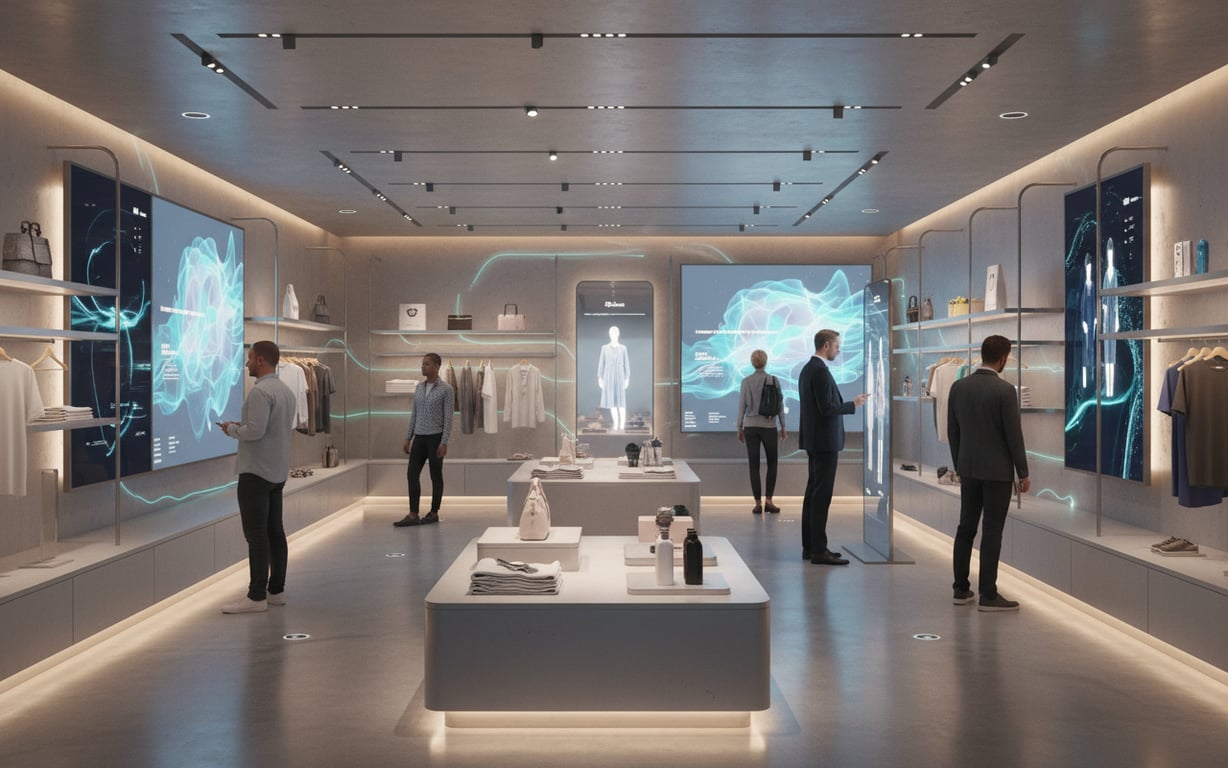
What does the future of stores look like for retailers that invest strategically now? Stores are becoming hybrid environments where edge computing, contactless checkout, and AI-enabled security operate seamlessly alongside traditional shopping, allowing physical locations to function as responsive, data-connected nodes within a broader omnichannel network.


Comments