
How Beauty Retailers Can Prevent Fragmented Planning with Modern Supply Chain Software


Beauty retailers prevent fragmented planning by connecting merchandising, demand forecasting, and replenishment on one shared data model instead of a patchwork of spreadsheets and point systems. Modern supply chain software links promotional agreements, seasonal demand signals, and inventory positions the instant a decision is made, so commercial and operational teams work from the same numbers. The payoff is fewer stockouts on winning products, less markdown on the rest, and a supply chain that can actually keep up with fast-moving beauty trends.
Table of Contents
Why fragmented planning threatens beauty retail growth
Fragmented planning is what you get when a beauty retailer's buying, supply chain, and store operations teams each work from their own spreadsheets and systems instead of one shared, real-time view of demand and inventory. A promotion gets negotiated with a vendor, a new shade range gets allocated to stores, and a replenishment order gets placed — all without any of those decisions being visible to the other teams until it is too late to react. That, in a nutshell, is what data silos in retail operations look like on the ground.
The stakes for beauty retailers are unusually high. Health and beauty is one of retail's most resilient growth categories, expected to keep expanding through the rest of the decade, yet it also carries one of the highest rates of unsold product among non-perishable consumer goods. That contradiction is not a demand problem — it is a planning infrastructure problem. When commercial teams launch campaigns and social moments spike overnight while supply chain systems only see baseline sales history, you end up with stockouts on winners and markdowns on everything else. Left alone, supply chain disruption in the beauty industry compounds quietly through lost sales, wasted inventory, and eroding customer loyalty.
What is sales and operations planning for beauty and cosmetics retailers
Sales and operations planning, often shortened to S&OP, is the recurring process that pulls a beauty retailer's demand forecasts, supply commitments, and financial targets into one coordinated plan. Instead of merchandising setting a promotional calendar in isolation while supply chain plans replenishment against last year's baseline, S&OP creates a shared cycle — monthly, or even weekly for fast-moving beauty categories — where every function reconciles its numbers against the same inventory and sales data.
For a cosmetics or personal care retailer, that means demand planners, category buyers, finance, and store operations reviewing the same forecast for upcoming launches, seasonal campaigns, and vendor-funded promotions before orders are placed, rather than after a stockout has already happened. Integrated business planning, sometimes called IBP, takes this one step further by wiring S&OP outputs directly into financial reporting, so a change in promotional depth or launch timing flows automatically into revenue and margin projections rather than needing its own separate reconciliation later.
The practical benefit is continuity: when a decision changes in one function, its implications show up everywhere else immediately, instead of surfacing downstream as a stockout or an inventory write-off. This approach to end-to-end supply chain planning replaces isolated functional decisions with a single coordinated view of demand, supply, and finance — which is exactly what fast-moving beauty assortments demand.
What causes fragmented planning in beauty retail
What causes fragmented planning in beauty retail is rarely one single failure. It is usually several disconnected systems and processes running independently against the same shared inventory. Commercial teams negotiate promotions, plan launches, and run campaigns in one set of tools, while supply chain teams forecast and replenish in another, and the two rarely update each other in real time.
A few recurring gaps show up across almost every beauty and cosmetics organization:
Promotional deals negotiated outside the supply plan: A large share of beauty promotions are funded by vendors and agreed weeks before replenishment teams see the details, so orders go out against baseline demand rather than the expected promotional lift.
Social-driven demand spikes with no isolation logic: When a product goes viral, the resulting sales surge often gets folded into the forecasting baseline instead of being flagged as a one-time event, which distorts future planning.
Inaccurate inventory records across channels: Testers, high-velocity SKUs, and store-level stock movements create constant discrepancies between what a system shows and what is actually on the shelf.
New product launches treated as pure additions: Many launches are reformulations or line extensions that cannibalize existing SKUs, but planning systems that don't model substitution overstate true incremental demand.
Disconnected point solutions: Separate tools for forecasting, assortment, and replenishment each hold a partial picture, so no single team ever sees the full consequence of a decision.
Each gap is manageable on its own. Together, they compound into the stockouts, overstocks, and margin erosion that define fragmented planning — and they're a big part of why supply chain planning fails in retail.
Retail assortment planning best practices for cosmetics brands
Retail assortment planning best practices for cosmetics brands start with curating a range that reflects real local demand, rather than pushing every new product uniformly across the network. Beauty retailers face relentless SKU proliferation in beauty retail: new shades, sizes, bundles, and limited editions land constantly, but shelf space and warehouse capacity do not grow at the same pace.
The first best practice is localizing the assortment by store cluster instead of shipping identical ranges everywhere. A foundation shade range that flies off the shelves in one market can sit untouched in another, so allocation decisions should be grounded in cluster-level demand data rather than gut feel. The second is being deliberate about which new launches are genuinely incremental. Only a minority of new beauty and personal care launches each year are truly new products rather than reformulations or range extensions, so planners need visibility into how a new SKU will cannibalize an existing one before committing shelf space and inventory to it.
The third practice is building an explicit wind-down plan for every outgoing product before a replacement launches, so residual stock doesn't turn into a clearance-rack problem months later. Tools built for space and assortment planning help retailers unify planogram, floor space, and SKU decisions so the assortment stays curated rather than overwhelming — the core promise of unified supply chain planning for cosmetics retailers, keeping the supply chain synchronized with what customers actually want to buy.
Seasonal demand planning and forecasting for cosmetics
Seasonal demand planning for cosmetics calls for forecasting models that can handle both predictable calendar events and unpredictable viral moments, because beauty demand can go from steady to sold out in a matter of hours. Holiday gift sets, back-to-school skincare routines, and summer SPF spikes follow patterns that historical sales data can reasonably anticipate.
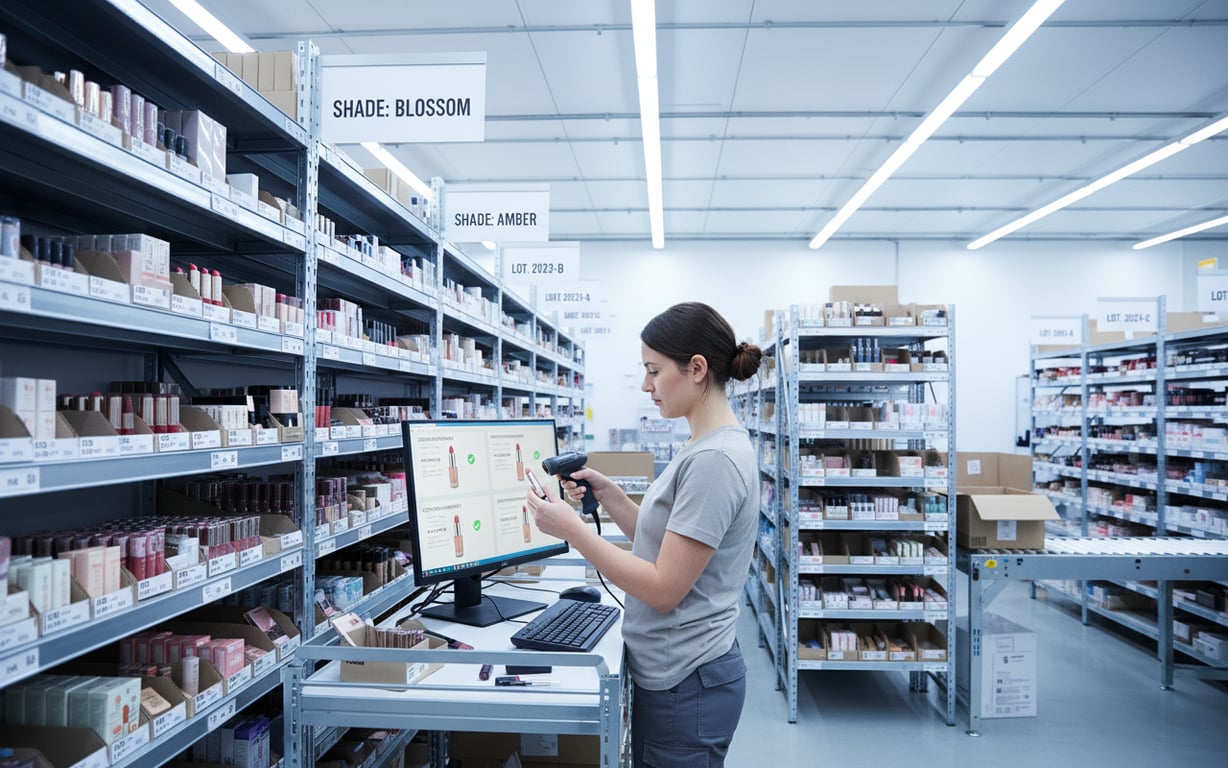
Viral demand is an entirely different beast. A lip balm featured in a pop star's music video famously sold out at major retailers within 72 hours and stayed backordered for more than a month afterward — a swing no conventional forecast could have predicted. Social commerce has poured fuel on this dynamic, with health and beauty becoming one of the most purchased categories on social shopping platforms, meaning discovery and purchase intent can now form in minutes rather than weeks.
Retailers who handle this well separate planned promotional lift, which can be modeled with expected uplift baked into the forecast ahead of time, from unplanned virality, which calls for real-time demand sensing and fast reallocation of existing stock rather than a forecast at all. Just as important, they treat a viral spike as a one-time event once it passes, so it doesn't quietly distort the following year's baseline.
Managing SKU proliferation and inventory across channels
Managing inventory management for cosmetics retailers across channels means keeping stock counts accurate and synchronized everywhere a customer might shop — stores, e-commerce, marketplaces, and buy-online-pickup-in-store — even as the number of shades, sizes, and bundles keeps ballooning. Beauty retailers often carry thousands of active variants, and a single moisturizer alone might exist in a dozen combinations of size, scent, and packaging.
Inventory accuracy is the foundation of managing this complexity. A meaningful share of health and beauty inventory records are inaccurate at any given moment, which is exactly why a confirmed online order can fail when the customer shows up at the store to collect it. Reserving, or ringfencing, a portion of inventory at the distribution center for online and app fulfillment protects those orders from being swallowed up by in-store sales before they can be picked.
Returns pile on more difficulty, because shade and texture mismatches drive higher exchange rates in beauty than in almost any other retail category — returns management in beauty ecommerce is not an afterthought, it's a core planning discipline. A structured, AI-driven inventory and replenishment approach connects returns disposition, restocking, and purchase-order automation so that variant-level stock stays trustworthy across every channel instead of drifting apart as the assortment grows.
Building cross-functional teams and vendor collaboration
Building cross-functional planning teams in retail — together with real vendor collaboration — closes the communication gap that causes most fragmented planning failures in the first place. When merchandising, supply chain, finance, and store operations meet on a shared cadence, a promotional decision or a launch date is understood by every function the moment it's agreed, not weeks later when the supply chain notices a shortfall.
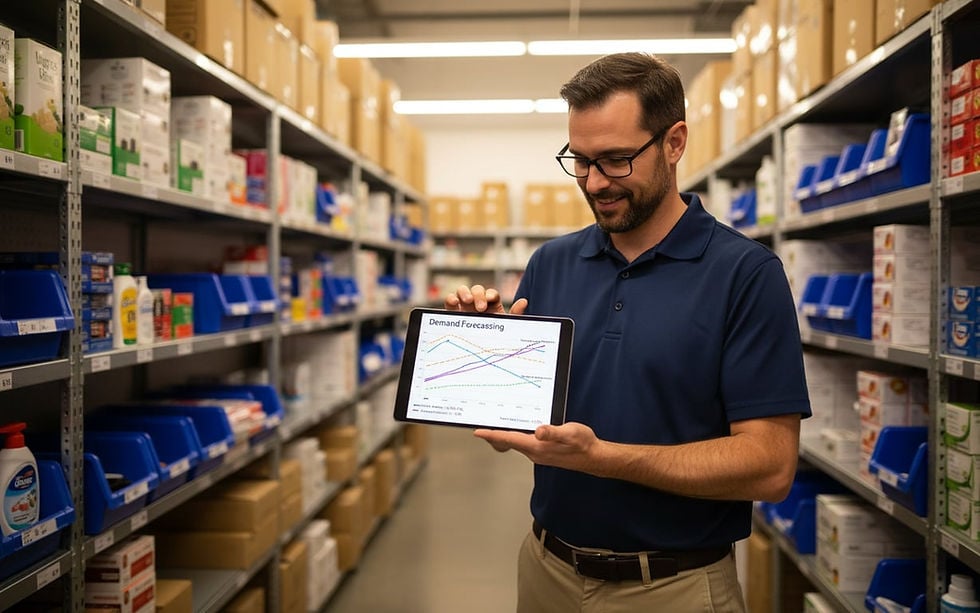
Vendor collaboration in retail supply chains matters just as much, since a large share of beauty promotions are funded and negotiated directly with brand partners. Bringing vendors into a shared planning environment, instead of managing agreements through email threads and spreadsheets, means trade fund commitments and promotional windows flow directly into the retailer's replenishment plan the moment a deal is signed. Some of the largest beauty manufacturers have pushed this even further on sustainability data specifically, with major personal care groups joining industry traceability alliances that share supplier-level data with retail partners to improve transparency across the supply chain.
The retailers that close planning gaps fastest tend to treat both cross-functional alignment and vendor collaboration as standing processes reviewed on a regular cycle, rather than one-off projects.
Which supply chain software features matter for beauty retailers
Which supply chain software features matter for beauty retailers depends on where fragmentation currently causes the most damage, but a handful of capabilities consistently separate platforms that unify planning from those that simply digitize existing silos. The starting point is a single data model: every module, from assortment to replenishment, should read and write to the same inventory and demand data instead of syncing periodically between separate databases.
Beyond that foundation, several specific capabilities matter most for beauty and cosmetics assortments:
Demand sensing and event tagging: The ability to detect real-time sales shifts across channels and flag viral spikes as non-repeating events, so a single sold-out moment doesn't distort next year's baseline forecast.
Promotion and vendor deal management: A shared workspace where trade fund commitments, discount depth, and campaign windows are visible to replenishment the moment a promotion is agreed, not after it launches.
New product forecasting without sales history: Matching a new SKU to comparable products by brand, format, price point, and category to generate a launch forecast before a single unit has sold.
Channel-specific forecasting against shared inventory: Separate demand forecasts for stores, e-commerce, and marketplaces reconciled against one inventory pool, rather than a single blended forecast that over-serves one channel.
Shelf-life and lot management: First-expired-first-out logic and configurable minimum remaining shelf-life rules by market, since beauty products face both spoilage risk and import compliance thresholds.
ERP and e-commerce integration: Native connections into point-of-sale, marketplaces, and enterprise resource planning software so inventory reflects reality within minutes rather than after a nightly batch update.
The difference between a fragmented and a unified approach shows up clearly in how each capability actually behaves:
Retailers evaluating ERP software for beauty retailers should prioritize vendors that can demonstrate these capabilities working together on one platform, because point solutions stitched together after the fact tend to recreate the same fragmentation they were meant to solve.
Achieving end-to-end supply chain visibility with integrated ERP
Achieving beauty retail supply chain visibility end-to-end means seeing the status of a product from supplier purchase order through warehouse receipt, store allocation, and final sale, all inside one system rather than piecing information together from a stack of separate reports. An enterprise resource planning platform built for consumer goods tracks purchase orders, production or co-packer status, and in-transit inventory in real time, so a delayed shipment or a quality hold shows up for planners immediately instead of surfacing as a stockout weeks later.

Lot and batch traceability is especially important for cosmetics, because ingredient recalls and shelf-life compliance both depend on knowing exactly where every unit came from and where it currently sits. Retailers using unified, probabilistic inventory-accuracy methods have reported meaningful reductions in the gap between recorded and actual stock compared with standard ERP counts alone — the structural fix behind reliable buy-online-pickup-in-store promises.
Large multinational health and beauty retailers show the payoff at scale. A pharmacy, health, and beauty operator like Super-Pharm, which runs stores across multiple countries, depends on exactly this kind of connected visibility to keep pricing, promotions, and stock levels consistent across every market and channel it serves. Beauty brands that have implemented integrated ERP systems have also reported meaningfully higher order fill rates and lower expedited freight spending after replacing disconnected spreadsheets with one connected platform.
How to start unifying your beauty retail planning
Unifying your beauty retail planning doesn't require ripping out every system on day one — it requires sequencing a small number of foundational changes in the right order. Retailers who succeed tend to follow a similar path, and it's the most practical answer to how beauty retailers can improve supply chain planning without stalling the business in the process:
Audit where demand, inventory, and promotional data currently live, and pinpoint every place where a decision in one system is invisible to another.
Establish a shared planning calendar so commercial, supply chain, and finance teams review the same forecast on the same cycle, rather than reconciling numbers after the fact.
Fix inventory accuracy first, because no forecasting or allocation improvement can outperform inaccurate stock data at the source.
Pilot unified planning on a single category — a high-velocity skincare or color cosmetics range works well — before rolling out platform-wide.
Select integrated planning software for beauty brands that connects assortment, demand, promotions, and replenishment on one data model, rather than adding yet another disconnected point solution.
Each step shortens the distance between a commercial decision and its supply chain consequence, which is the whole point of moving from fragmented to unified beauty retail planning.
Frequently Asked Questions
What is fragmented planning in beauty retail? It happens when merchandising, supply chain, and finance teams manage decisions in separate systems that don't share data, so one team's action goes unseen by another until a stockout or overstock appears.
How does sales and operations planning differ from demand forecasting? Forecasting predicts future sales, while sales and operations planning reconciles that forecast against supply capacity, inventory, and financial targets on a recurring cycle.
Why does SKU proliferation hit beauty retailers harder than other categories? Frequent shade, size, and formula variations plus limited-edition launches expand assortments faster than shelf space and warehouse capacity can grow.
How often should demand forecasts be updated for cosmetics? Fast-moving categories such as color cosmetics benefit from weekly reviews during launches and promotions, while more stable categories can run on a monthly cycle.
Why do online pickup orders sometimes fail for beauty products? Inaccurate inventory records mean in-store sales and online reservations draw from the same physical stock without the system reflecting real-time changes.
Which supply chain software features matter most for beauty retailers? A shared data model, demand sensing, promotion and vendor deal management, new-launch forecasting, and shelf-life management deliver the most impact.
How does integrated ERP improve supply chain visibility? It tracks purchase orders, production status, and inventory location on one platform, surfacing delays or quality holds immediately instead of downstream.
How can beauty retailers reduce shade-mismatch returns? Structured return portals combined with SKU-level reason analysis feed insights back into product pages, sampling, and packaging to reduce repeat mismatches.
How long does unifying planning software typically take? Timelines vary by scope, but piloting one category or channel before expanding platform-wide tends to produce faster, more reliable results.
What results can retailers expect from unified planning? Retailers that unify commercial and supply chain planning report higher on-shelf availability, more accurate promotional forecasts, and less capital tied up in slow-moving stock.


Comments