
Benefits of Retail Analytics: How Data Analytics in Retail Industry Drives Business Intelligence and Growth

Every transaction, click, store visit, and customer interaction generates data. Yet for many retailers, this data remains fragmented, underutilized, or locked inside systems that speak different languages. The result? Decisions based on partial views of reality, delayed reactions to market changes, and missed opportunities to truly understand customers. Retail analytics changes this equation. By systematically collecting, analyzing, and interpreting retail data, organizations can move from reacting to yesterday’s results to anticipating tomorrow’s demand. In an industry where speed, precision, and relevance define success, analytics has become a core capability - not a nice-to-have.
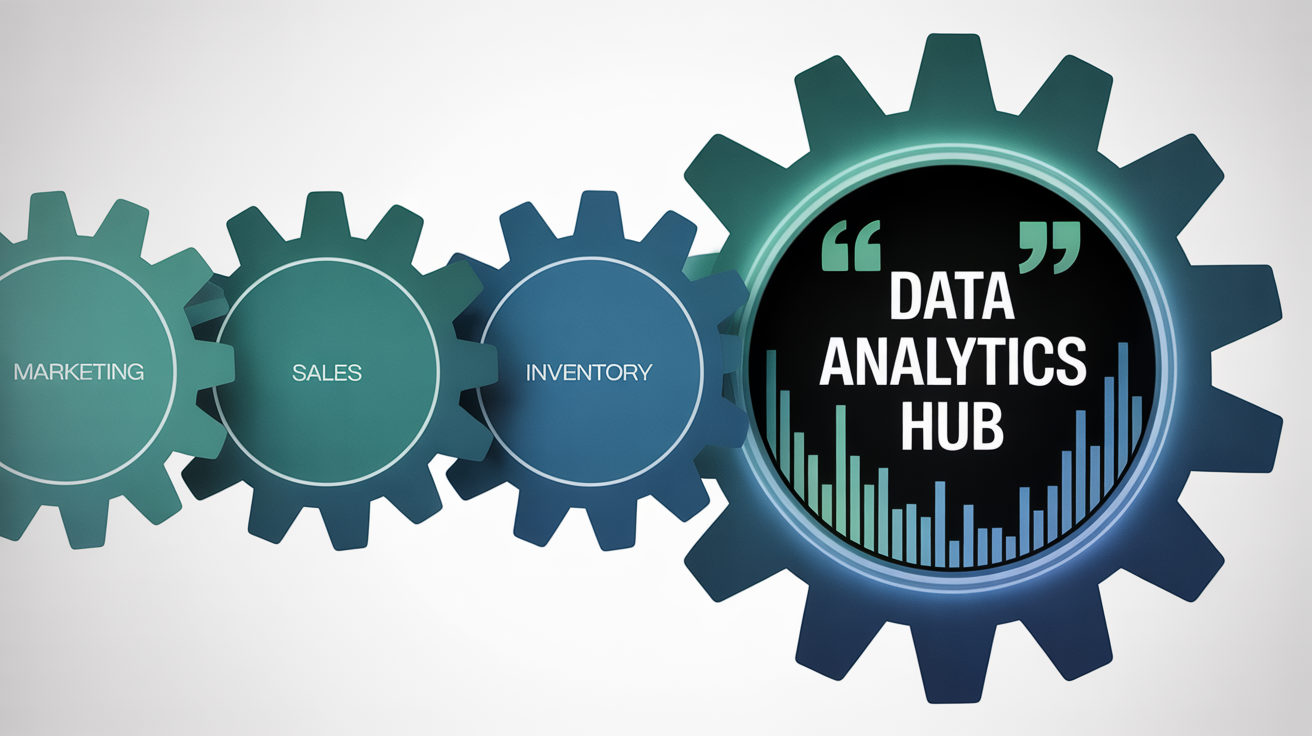
What is retail analytics and why does it matter
Retail analytics is the systematic process of collecting, analyzing, and interpreting large datasets to improve strategic decision-making and overall business performance in the retail sector. This approach transforms information from various points of interaction into insights, enabling retailers to refine operations, personalize customer experiences, and foster growth in a competitive market.
Understanding retail analytics involves recognizing its difference from traditional business reporting. Conventional reporting focuses on historical data and basic metrics, while retail data analysis uses algorithms and predictive modeling to uncover patterns, forecast trends, and provide real-time insights for immediate decisions. This shift from reactive to proactive analytics is essential for retailers navigating changing consumer behaviors and market dynamics.
The importance of analytics for retail is significant in today's data-driven economy. Retailers generate large amounts of information daily through point-of-sale systems, e-commerce platforms, mobile applications, social media, and customer service. Without analytical frameworks, this data remains untapped. Analytics for retail turns this information into strategic advantages by enabling data-driven decision-making across business functions, from inventory and pricing to marketing and customer service.
Modern retail requires agility and precision that analytics provides. Retailers using data-driven approaches gain advantages through improved efficiency, customer satisfaction, and profitability. The ability to understand customer behavior, predict trends, and refine resource allocation is fundamental to retail success in the digital age.
Analytics for retail - core components and data sources
Effective analytics for retail relies on interconnected components that create an analytical ecosystem. These components transform data into business intelligence platforms that support decision-making across retail operations. Understanding these elements is essential for retailers implementing data analytics in retail industry initiatives.
Data collection is the first component, encompassing sources that provide visibility into retail operations. In-store systems, including point-of-sale terminals, inventory management software, and customer relationship management platforms, generate transactional data that reveals purchasing patterns, product performance, and customer preferences. Digital channels add information through e-commerce platforms, mobile applications, social media, and email marketing, creating customer journey maps.
Retailers use Internet of Things (IoT) devices to gather real-time operational data. Smart shelves monitor inventory, while in-store cameras and sensors track customer movement. These technologies provide insights into customer behavior and operational efficiency. Third-party data sources, including demographic databases, weather information, economic indicators, and competitive intelligence, enrich internal datasets and enhance analytical accuracy.
Data storage and processing infrastructure form the technological backbone of retail business intelligence systems. Retailers use cloud-based data warehouses such as Amazon Redshift, Google BigQuery, and Snowflake to centralize datasets while ensuring scalability, security, and accessibility. These platforms support real-time data ingestion and processing, enabling retailers to respond to changing market conditions and customer behaviors.
Analytics engines powered by machine learning algorithms and artificial intelligence transform data into insights. These systems identify patterns, predict trends, and automate decision-making. Visualization and reporting tools present insights through dashboards and interactive reports that enable stakeholders to understand and act upon data-driven recommendations.
Enhanced customer experience through customer analytics retail
Customer analytics retail has changed how retailers understand and serve their customers by providing visibility into individual preferences, behaviors, and needs. This approach to data analytics for retailers enables businesses to create personalized experiences that drive customer satisfaction, loyalty, and lifetime value. The shift from mass marketing to individualized engagement is a significant benefit of modern retail analytics.
Personalization engines powered by customer analytics retail analyze datasets including purchase history, browsing behavior, demographic information, and interaction patterns to create customer profiles. These profiles enable retailers to deliver product recommendations that improve conversion rates and order values. Algorithms consider factors such as seasonal preferences, price sensitivity, brand affinity, and purchase timing to suggest products that align with customer needs.
Retail web analytics provides insights into online customer behavior, tracking metrics such as page views, session duration, bounce rates, and conversion funnels. This information helps retailers refine their digital platforms by identifying pain points in the customer journey, improving website navigation, and streamlining checkout processes. Heat mapping and user session recordings reveal how customers interact with product pages, enabling retailers to refine layouts and content for engagement.
Customer segmentation is another application of customer analytics retail, allowing retailers to group customers based on shared characteristics, behaviors, or preferences. These segments enable targeted marketing campaigns, personalized promotions, and communication strategies that resonate with customer groups. Segmentation considers factors such as purchase frequency, spending patterns, channel preferences, and engagement levels to create customer categories.
Real-time personalization enables retailers to adapt customer experiences based on current behavior and context. This includes pricing adjustments, personalized homepage content, promotional offers, and product recommendations that reflect customer interests and needs. The ability to respond to customer behavior creates engaging shopping experiences that drive customer satisfaction and sales performance.
Optimized inventory management and predictive analytics retail industry
Predictive analytics retail industry applications have transformed inventory management from reactive replenishment to proactive demand planning, enabling retailers to refine stock levels while minimizing carrying costs and stockout risks. This approach leverages historical sales data, seasonal patterns, market trends, and external factors to forecast demand, changing how retailers approach inventory optimization.
Demand forecasting models analyze variables including historical sales performance, promotional activities, weather patterns, economic indicators, and competitive actions to predict product demand. These models consider demand patterns and events such as holidays, sales events, or market disruptions that can impact inventory requirements. Machine learning algorithms refine these predictions by learning from sales outcomes and adjusting forecasting models.
Retail store analysis enables location-specific inventory optimization by considering factors such as local demographics, regional preferences, store size, and historical performance patterns. This approach ensures that each location maintains inventory levels based on its characteristics and customer base. Analytics can identify slow-moving products early, enabling markdowns or transfers to locations where demand is higher.
Business analytics retail applications extend beyond inventory management to encompass supply chain optimization. Predictive models can identify supply disruptions, recommend alternative suppliers, and refine distribution strategies to ensure product availability while minimizing costs. These capabilities are valuable during peak seasons or demand surges when traditional inventory management approaches may fall short.
Automated replenishment systems powered by predictive analytics can generate purchase orders, adjust safety stock levels, and coordinate with suppliers. These systems monitor inventory levels, sales velocity, and lead times to maintain stock positions while reducing administrative overhead and human error. The result is improved inventory turnover, reduced carrying costs, and enhanced customer satisfaction through better product availability.
Pricing analytics retail strategies for maximum profitability
Pricing analytics retail strategies have evolved into systems that enable dynamic pricing optimization based on market conditions, competitor actions, and customer behavior patterns. Retail analytics software empowers retailers to implement data-driven pricing strategies that maximize profitability while maintaining competitive positioning and customer satisfaction. This approach transforms pricing from intuition-based decisions to scientific optimization processes.
Dynamic pricing algorithms analyze factors including demand elasticity, competitor pricing, inventory levels, seasonal trends, and customer segments to determine price points for products. These systems can adjust prices based on predefined rules and market conditions, ensuring that retailers capture value while remaining competitive. Pricing models consider cross-product relationships and cannibalization effects to refine category profitability rather than individual product margins.
Retail analytics tools enable competitive price monitoring by tracking competitor pricing across channels and products. This intelligence allows retailers to respond to price changes while maintaining positioning. Automated alerts notify pricing managers when competitive moves occur, enabling response to market dynamics. Price optimization engines can recommend responses that consider competitive threats and market positioning objectives.
Customer segmentation plays a role in pricing analytics retail strategies, enabling retailers to implement pricing approaches for different customer groups. Analytics can identify price-sensitive segments that respond to discounts and promotions, as well as premium segments willing to pay higher prices for quality or convenience. This segmentation enables personalized pricing strategies that maximize revenue from each customer group while avoiding margin erosion.
Promotional optimization represents another application of pricing analytics, helping retailers design and execute campaigns that drive sales while protecting profitability. Analytics can predict promotional response rates, refine discount levels, and identify the most effective promotional timing and channels. These insights enable retailers to achieve promotional objectives while minimizing the impact on regular-price sales and overall margins.
Retail analytics examples - real-world success stories
Retail analytics examples from leading companies demonstrate the power of data-driven decision-making across retail operations. These analytics use cases in retail illustrate how analytical approaches can deliver business results and competitive advantages. Understanding these success stories provides insights into the applications and benefits of retail advanced analytics implementations.
Walmart's implementation of predictive analytics represents one of the prominent retail analytics examples in the industry. The retail giant processes data from its global operations, using this information to refine inventory management, predict demand patterns, and enhance customer experiences. Their analytics platform reduced out-of-stock instances while decreasing inventory carrying costs. The company's ability to predict demand fluctuations during weather events, holidays, and promotional periods has become a competitive advantage.
Target's personalized marketing analytics demonstrate the power of customer analytics in driving sales growth and customer engagement. The retailer's analytics platform analyzes customer purchase patterns, demographic information, and behavioral data to create marketing campaigns. Their pregnancy prediction model, which identifies expectant mothers based on purchasing patterns, generated media attention and demonstrated the capabilities of modern retail analytics. This personalization approach has contributed to increased customer loyalty and higher average transaction values.
Amazon's recommendation engine represents an example of retail advanced analytics in action. The e-commerce giant's algorithms analyze customer behavior, purchase history, and product relationships to generate product recommendations that drive sales. Their dynamic pricing algorithms adjust prices based on demand, competition, and inventory levels, refining revenue while maintaining competitive positioning. The company's analytics capabilities extend to supply chain optimization, fraud detection, and operational efficiency improvements across their global operations.
Sephora's Beauty Insider program showcases how retail analytics can enhance customer experiences while driving business growth. The program leverages customer data to provide product recommendations, targeted promotions, and beauty advice. Their analytics platform tracks customer preferences, purchase history, and engagement patterns to create experiences that have resulted in program members generating a large portion of total sales.
Retail business intelligence solutions - implementation and best practices
Implementing retail business intelligence solutions requires a strategic approach that aligns technology capabilities with business objectives while ensuring adoption across the organization. Implementations follow best practices that address challenges and maximize the value derived from analytical investments. Understanding what are two ways that data analytics benefits retailers helps guide implementation priorities and resource allocation decisions.
The foundation of successful retail business intelligence solutions begins with objectives and success metrics that align with business strategy. Retailers must identify use cases where analytics can deliver value, such as inventory optimization, customer segmentation, pricing optimization, or operational efficiency improvements. These objectives should be quantifiable and time-bound, enabling organizations to measure the return on investment from their analytical initiatives.
Data integration represents an aspect of retail business intelligence implementation. Retailers operate systems including point-of-sale platforms, inventory management systems, e-commerce platforms, customer relationship management tools, and financial systems. Creating a data architecture that consolidates information from these sources requires planning and technical expertise, often leveraging Integration & Data Transformation Services. Cloud-based data platforms provide scalable solutions for data integration while ensuring security and accessibility.
Change management and organizational adoption often determine the success or failure of retail analytics initiatives. Employees must understand how to interpret and act upon analytical insights, requiring training programs and support. Creating a data-driven culture involves demonstrating the value of analytics through quick wins and success stories while providing tools and resources that make data accessible to non-technical users. Executive sponsorship and communication about the retail analytics benefits help drive organizational adoption.
Retail analytics benefits are maximized when organizations implement data governance frameworks that ensure data quality, security, and compliance. This includes establishing data standards, implementing quality control processes, defining access controls, and creating procedures for data management and maintenance. Monitoring and optimization of analytical systems ensure performance and relevance as business needs evolve. Retailers also invest in analytics capabilities development, staying current with technologies and methodologies that can enhance their competitive position.
Future of retail analytics - emerging trends and technologies
The future of retail analytics is being shaped by technologies and methodologies that promise to deliver insights and capabilities. These trends in retail analytics software and data analytics in retail industry applications are transforming how retailers understand customers, refine operations, and compete in digital marketplaces. Retailers are beginning to explore and implement these capabilities to maintain competitive advantages.
Artificial intelligence and machine learning technologies are evolving beyond predictive analytics to encompass applications such as computer vision, natural language processing, and autonomous decision-making systems. These retail advanced analytics capabilities enable retailers to analyze unstructured data sources including social media content, customer reviews, images, and video content to gain insights into customer preferences and market trends. AI-powered chatbots and virtual assistants are becoming sophisticated, providing customer service while gathering interaction data.
Real-time analytics and edge computing are enabling retailers to process and act upon data instantaneously, creating opportunities for dynamic pricing, personalized promotions, and inventory adjustments. These capabilities are valuable in omnichannel retail environments where customer experiences must be consistent and responsive across all touchpoints. Internet of Things devices and sensors are generating data about customer behavior, product performance, and operational efficiency.
Augmented reality and virtual reality technologies are creating data collection opportunities while enhancing customer experiences. AR applications can track customer interactions with virtual products, while VR environments provide settings for testing customer preferences and behaviors. These technologies generate behavioral data that traditional analytics methods cannot capture, providing insights into customer decision-making processes and preferences.
Privacy-preserving analytics and federated learning approaches are emerging in response to data privacy regulations and consumer concerns. These technologies enable retailers to gain insights from customer data while maintaining privacy and security standards. Blockchain technology is being explored for supply chain transparency and data integrity, while quantum computing promises to solve optimization problems that are computationally intensive. The convergence of these technologies will create possibilities for retail analytics that are difficult to imagine.
Frequently Asked Questions
What are the main benefits of retail analytics for businesses?
Retail analytics provides benefits including improved inventory management, enhanced customer personalization, refined pricing strategies, better demand forecasting, increased operational efficiency, and data-driven decision making. These capabilities result in profitability, improved customer satisfaction, and competitive advantages.
How does predictive analytics help retailers manage inventory?
Predictive analytics analyzes historical sales data, seasonal patterns, market trends, and external factors to forecast demand. This enables retailers to refine stock levels, reduce carrying costs, minimize stockouts, and improve inventory turnover rates while ensuring product availability for customers.
What types of data do retailers typically analyze?
Retailers analyze data types including sales transactions, customer demographics, website behavior, inventory levels, pricing information, promotional performance, social media interactions, weather data, economic indicators, and competitive intelligence. This data approach provides insights into business performance.
How can small retailers implement analytics without large budgets?
Small retailers can start with cloud-based analytics platforms, focus on use cases with clear ROI, leverage free or low-cost tools like Google Analytics, partner with analytics service providers, and build capabilities as they demonstrate value and generate returns from initial investments.
What are the key challenges in implementing retail analytics?
Common challenges include data integration from disparate systems, ensuring data quality and accuracy, developing analytical skills within the organization, managing change and adoption among employees, maintaining data privacy and security, and demonstrating a clear return on investment to justify the investment in analytics capabilities.
How do retailers use analytics for personalized marketing?
Retailers use customer analytics to segment audiences based on behavior and preferences, create targeted marketing campaigns, personalize product recommendations, optimize email marketing timing and content, customize website experiences, and develop loyalty programs that resonate with specific customer groups.


Comments